



Books


New Memoirs Reveal a Different Side of the Jewish Catskills
Beginning in the 1920s, when Jews started buying land and building homes and hotels in the area, the Catskills region in southeastern New York was a Garden of Eden where Jews could experience a sense of freedom, community, safety and creativity, a place of natural beauty free of antisemitism. This was a vision of America.
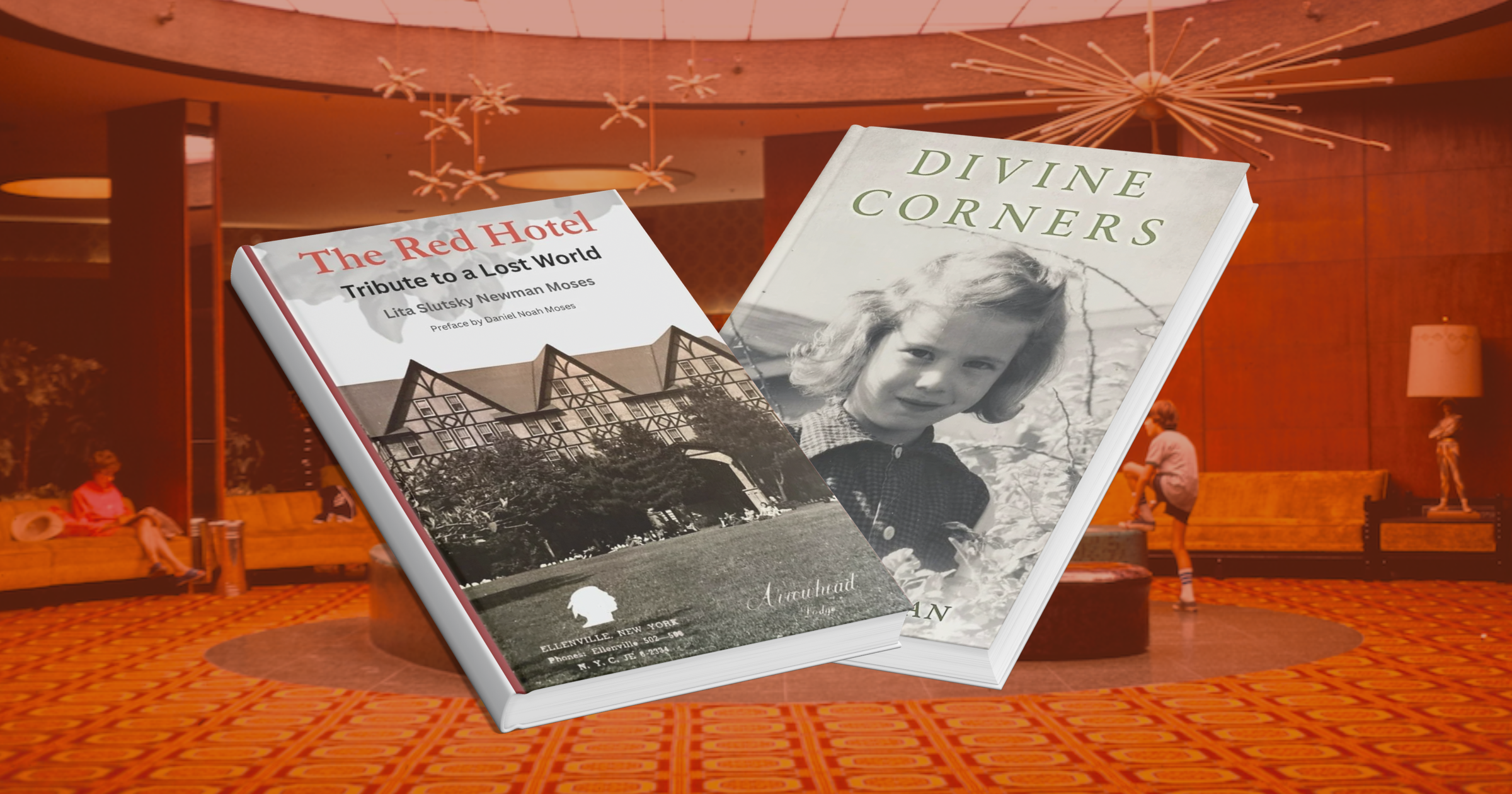
New stories are still being told about the Catskills, and old stories are being revealed for the first time—among them two recently published books that uncover less well-known pieces of Catskills history: The Red Hotel: A Tribute to a Lost World by Lita Slutsky Newman Moses (Combray House Books) and Divine Corners: In the Shadow of the Holocaust on a Catskills Chicken Farm by Michelle Friedman (Amsterdam Publishers).
In The Red Hotel, Moses recounts growing up in the Arrowhead Lodge, in Ellenville, which was run by her mother, Fannie Newman née Slutsky.
Moses’s immigrant grandfather, Shmuel Slutsky, and his siblings, accustomed to country living from their early lives in Russia, bought land and ran a cluster of hotels and kuchaleyns (boarding houses with shared kitchens). Among their properties were the Nevele and the Fallsview, both also in Ellenville. The Arrowhead Lodge, affectionately dubbed “The Red Hotel,” however, was singular in its political underpinnings.
Open to all, the Arrowhead Lodge regularly welcomed a counterculture composed of union organizers, factory workers, theater directors, writers, artists and leftists of all backgrounds. While not welcome at some hotels in the region, Black guests found acceptance at Arrowhead—including musician, actor and activist Paul Robeson. He performed a concert at the hotel, after being banned from other venues because of his political activity.
Progressive in outlook and mostly secular in their Judaism, guests shared dreams of a humane, inclusive democracy with freedom for all. Performers included Pete Seeger, the Weavers and others blacklisted during the Red Scare. Joe Papp had a resident theater company at Arrowhead, well before establishing New York City’s Public Theater.
While she clashed with her cousins who ran the family’s other properties, especially about her decision to welcome everyone into her hotel, Moses’s mother learned carpentry and plumbing, supervised the kitchen, booked the entertainment and scrimped to pay the bills, all while serving as a gracious host. Her attitude when unexpected guests arrived? “You could always add water to the soup.”
On summer days, Moses could hear the cha-cha broadcast over the loudspeakers at the nearby Nevele, while at the Arrowhead, they played Beethoven’s Fifth Symphony.
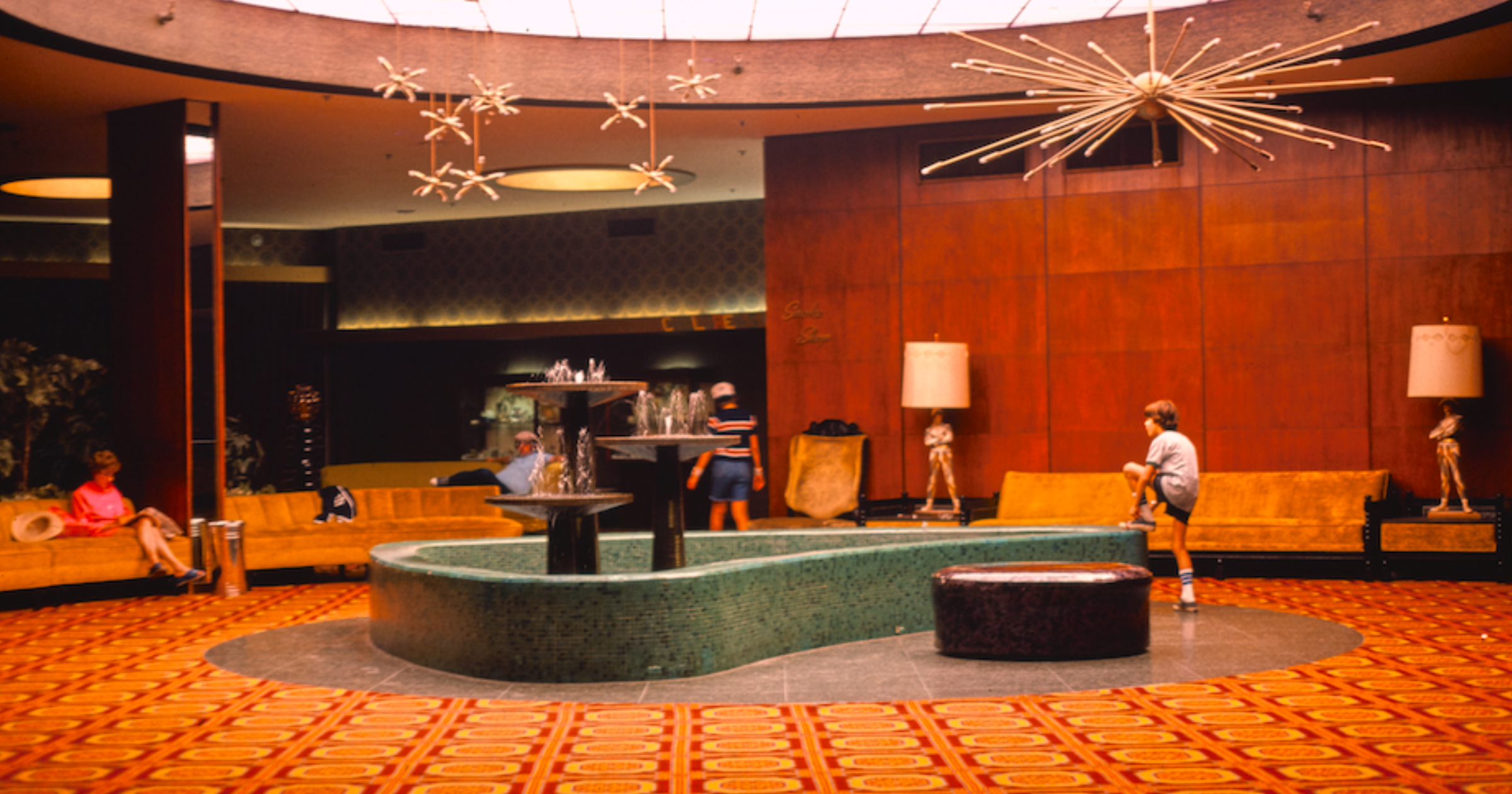
In her memoir, she conjures up the look of the place, with its communal bathrooms and the parlor where her mother served afternoon tea and strudel to the guests. “The parade of people passing through my childhood was dizzying,” she writes. “A curious child, I observed romances begin and marriages end.” She described being lulled to sleep with songs of the Spanish Civil War, like “Viva la Quinta Brigada” and “Los Cuatro Generales.”
Moses, who worked as a psychotherapist for 45 years in Westchester County and New York City, writes in compelling prose, sharing that, as a child growing up in the hotel, she felt neglected by her mother.
“Life at the Arrowhead was never dull,” she writes. She knew she would write about the hotel since she was 12. The Arrowhead “has been on my mind all my life,” she said in an interview.
For Moses, who now lives in the Berkshires, writing her memoir was gratifying and therapeutic, and, in the process, she came to feel greater compassion for her mother.
Michelle Friedman, the daughter of two Holocaust survivors, shares a Jewish Catskills story far removed from hotels and resorts. She grew up in the 1950s and 1960s on a chicken farm in the hamlet of Divine Corners, part of the town of Fallsburg. Her family’s experience was one of hard work, with dark edges.
In Divine Corners, she writes of her isolated life. Despite the prevailing image of the Catskills as a Jewish mecca, there weren’t many Jews near their 5-acre farm. She was terrified of her father, Arnold, for most of her childhood. He was, she writes, “a complicated man inhabited by a turbulent soul.” Growing up in Poland, he had planned to be an engineer, but after surviving the war and coming to America in 1949, his brother arranged for the family to buy a hotel and farm—the hotel failed and her father was left to run the farm.
While he had a good reputation as an egg farmer (with 20,000 chickens!), he was angry at the way his life turned out and could be violent with his three children. Friedman writes that her younger brother suffered the most, while she considers herself the most resilient of the three.
Friedman learned to love the outdoors, “watching the seasons unfold on the panoramic stage” of her yard, and acknowledges that in some ways it was an ideal childhood. The family enjoyed listening to opera and Beethoven symphonies on records ordered by mail. The self-appointed family historian, she also listened attentively when relatives would gather at their home for holidays. After tea in assorted glasses with slices of lemon and sugar cubes, the adults would talk about the Holocaust.
The book opens with her father’s funeral in 2017, shortly after his 96th birthday. Her narrative alternates accounts of her parents’ stories and her own, drawing on conversations she had with her mother, Regina, who, like her husband, was born in Poland. During the Covid pandemic, Friedman and her mother, who today lives in Monsey, N.Y., spent time walking and delving deeply into family history, exploring why the family stayed on the farm for so long, why her mother stayed in a marriage with a man who was rigid and controlling.
Now a New York City psychiatrist, Friedman writes beautifully, with candor and empathy. She comes to see her father as a good person with a terrible temper.
“Writing the book helped me feel much more peaceful about my life story and the big questions, the family dynamics and the complexities of living in such an odd place,” she said in an interview. “I’m in my 70s, I’m really interested in how the book connects with other people’s stories and their own struggles and redemption.”
Sandee Brawarsky is an award-winning journalist, editor and author of several books, most recently of 212 Views of Central Park: Experiencing New York City’s Jewel From Every Angle.
 Facebook
 Instagram
 Twitter

Leave a Reply