



Arts
Film


Why Jews Keep Going Back to the Catskills
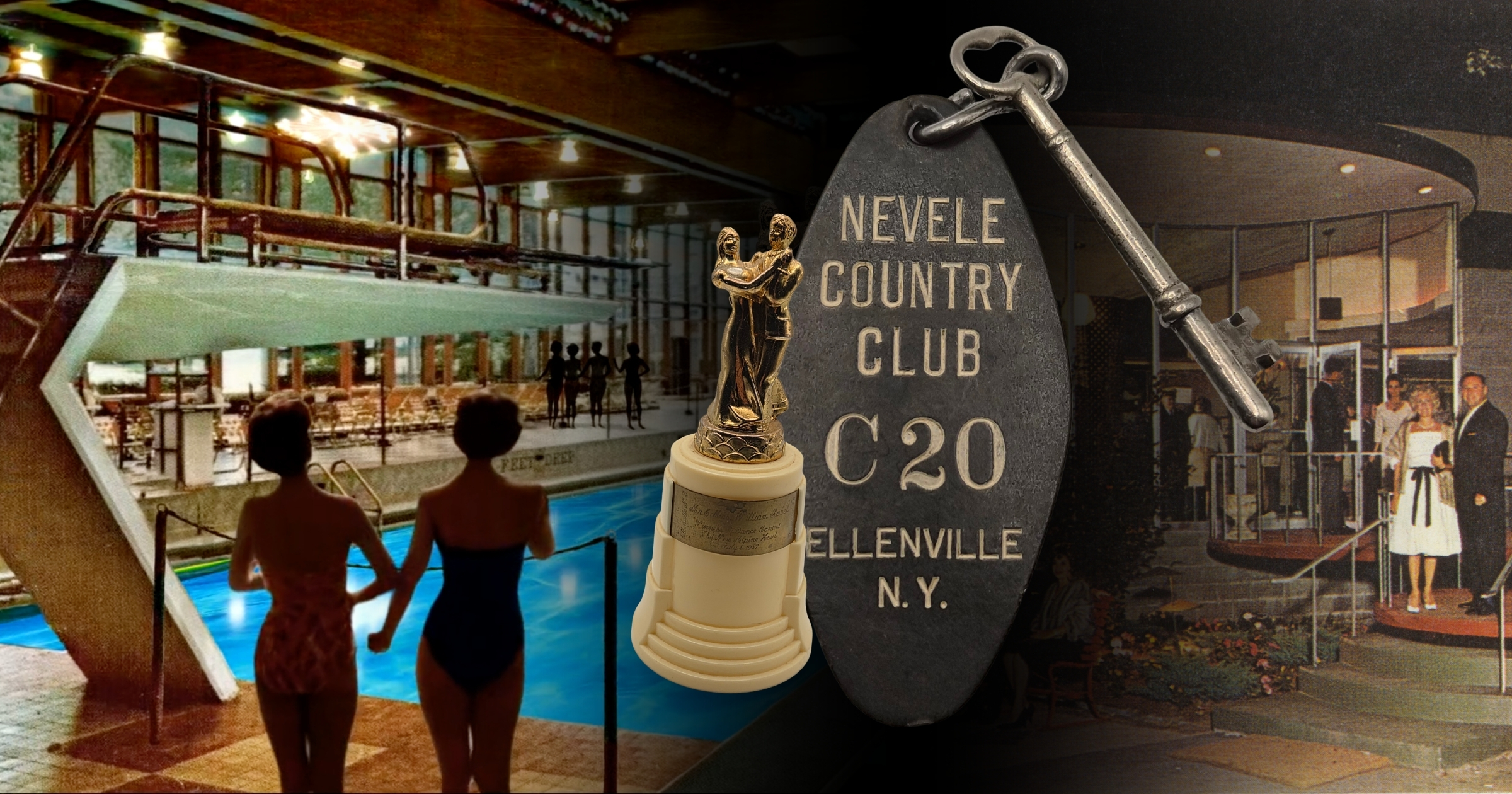
Route 17 cuts through Sullivan County, leading the way to the remains of the storied Jewish-owned hotels and bungalow colonies that once defined the Catskills, a mountainous region that encompasses four counties in southeastern New York. Many of the old resorts, first opened in the early 20th century to welcome Jewish vacationers barred from country clubs and mainstream hotels in the state, are now piles of stone. A few have been transformed and still welcome guests, and some bungalow colonies still thrive.
“We may not inhabit a place, but the place inhabits our spirits forever,” said artist Annice Jacoby, who helped create and narrate a short documentary film, Jacoby’s: A Retrospective, about the bungalow colony founded by her grandfather in Woodbourne and streaming on the Borscht Belt Historical Marker Project website. For her, the colony was a true paradise. “I didn’t want that history to disappear.”
Which is why many of us keep going back to the Catskills. This summer, a full-length documentary, an Off-Broadway play and an exhibition at a local museum evoke the spirit of the area’s heyday.
A musical adaptation of A Walk on the Moon, a 1999 film set in a bungalow colony, is playing at the Laura Pels Theatre through August. The musical, like the film, follows the story of Pearl Kantrowitz (played by Talia Suskauer), a restless Brooklyn mother of a rebellious teen. Pearl is vacationing with her daughter at a bungalow colony during the momentous summer of 1969, when the nearby Woodstock music festival and the moon landing collide with the tightly knit world she has always known.
Pamela Gray, who wrote the screenplay for the movie as well as the musical (and some of the lyrics), spent her childhood summers at bungalow colonies and vividly remembers the summer of 1969 and being at the pool and “watching hippies through a chain link fence, walking to Woodstock,” she said in an interview. Then 13, she wanted to tag along.
Now playing at film festivals and other venues is another Catskills film, We Met at Grossinger’s. Paula Eiselt’s new documentary is an homage to the landmark hotel, which was run by generations of Grossinger women, and highlights many of the comedians who launched careers there, including Mel Brooks, Carl Reiner, Jerry Lewis and Joan Rivers.
People had amazing experiences creating communities at Grossinger’s and other hotels, observed Eiselt. “They were very physically present places. From the moment you woke up until you went to sleep, you were socializing with other people,” she said in an interview. “Now, especially post-October 7, people long for those places of safety, where they were able to be themselves.”
Comedian and actor Jackie Hoffman, a series regular on Only Murders in the Building, feels the same, noting in the documentary that if Grossinger’s “were reincarnated in this moment, I’d be there in a hot minute.”
Susan Etess, a retired private school administrator from New York and the granddaughter of famed hotel hostess and manager Jenny Grossinger, grew up at her family’s hotel. After school, she said in an interview, she would help the switchboard operator or alphabetize reservation cards in the office.
“I’m thrilled to have this movie, which captures the hotel, especially the women who ran it,” Etess said. Beginning with her immigrant Great-Grandmother Malka, matriarch of the family who founded the hotel with her husband, she noted, “They all felt fortunate to be in this country.”
Also this summer, the Catskills Borscht Belt Museum in Ellenville is opening a new exhibition, “Catskills Romance: Love and Desire in the Borscht Belt,” highlighting the relationships, both conventional and illicit, that developed in the resorts and bungalow colonies, with the cupid-like help of the resort owners, maître d’s, social directors (tummlers), dance instructors and other staff. It also explores the courtship rituals and social scenes that defined a Catskills summer: the “Flirtation Walks” and poolside schmoozing as well as the mambo nights, elaborate singles weekends, free honeymoon and golden anniversary dinners.
Andrew Jacobs, the museum’s board president and longtime observer of Catskills culture, points to the “growing appreciation for the unacknowledged role that the Catskills had in shaping American culture, from comedy to food to architecture and design.”
“It’s not just nostalgia,” he said. “This is very much an American story about people who were disenfranchised, not allowed in, who went and created their own leisure world.”
“What started as a response to bigotry,” he said, “blossomed into a triumph.”
Sandee Brawarsky is an award-winning journalist, editor and author of several books, most recently of 212 Views of Central Park: Experiencing New York City’s Jewel From Every Angle.
 Facebook
 Instagram
 Twitter

Rich Klein says
Great article – but too often in these articles about the Borscht Belt – Jewish sleepaway camps get omitted. There were many across Sullivan County in particular that were the summer homes for thousands of kids in the 20th century.
ADRIENNE CHIRON says
My entire childhood was Brighton Beach and the Catskills. I sat on the knees of Wyneric who owned the Concord, the full Nevele daughters, and walking the Neversink River with walking sticks. My Father had conventions up there for the Williamsburg Credit Union, and my “Second Family” embraced me like their child. I event have, on my dresser, Jiminy Cricket I made at day camp at the Nevele.
I just put up for auction some of the art that he and my Mother purchased at their art auctions. I have a Katz piece of work I inherited as well. Warm loving thought at the Pines Hotel as well.
Jack Godfrey says
The museum is not just for the baby boomer generation, but an important American story for the younger people to appreciate the impact the resorts had on American culture. Early American television had shows headlined with comedians who began their careers in the Borscht Belt. The list was a who’s who of Jewish comedians Sid Ceaser, Jerry Lewis, Milton Berle, Danny Kaye and Jack Benny.
Charlie Silver says
Bungalow Colony kids had so much freedom and play and pool time, only required to be home for lunch, dinner, and bed time. They knew how lucky they were, not having to spend their summers in Brooklyn or the Bronx… The fresh air of the country, not hazy hot humid sticky of the city. Most were too lucky to yet know how lucky their parents were. At my bungalow colony, just about all the parents were holocaust survivors. And yet, our parents trusted us and the borscht-belt world to hitchhike into town. Now that’s the freedom of the borscht-belt Catskills.. and the laughter.
Marcia Nahmias Turletsky says
Fabulous article! I recognized your name immediately. My mom Marilyn Nahmias played Mah Jong with your mom in Elmont! Your mom was a wonderful person!! Your article truly hit home. I thoroughly enjoyed it!!
Shirley says
A new paperback book, “Summer Husband” by Amy Lorowitz should be on everyone’s list too read, taking place at summer camp in the Catskills. It’s available from Amazon.
Laurie Allison says
My family started going to Overlook bungalow colony (not far from Wurtsboro) when I was about 8 and my sister was 5. We shared that first bungalow with my cousins family. All together 8 of us in a 2 bedroom, one bathroom bungalow. The rooms were very large and somehow I can’t recall ever feeling crowded. I’m sure I have blocked out the “1 bathroom” memories. The following years we had our own bungalow. My last summer going to the bungalow I turned 16. It feels like yesterday. I still communicate on FB with others who were my friends at that time. The following year my parents bought a house on Frazier Road in Kiamesha Lake, not far from the Concord. I started working summers and winter vacations at Kutsher’s when I was 18. I was a counselor and met my husband who was then a lifeguard at Kutsher’s. Oh the stories we could all tell.
Patti Posner says
My memoir My View From The Mountains, A Catskills Memoir captures an important aspect of the Catskills that many are unaware of. My family owned the Hotel Brickman and I was the bosses daughter and the manager of the kitchen for the last 10 years we owned the hotel. Most guests who came into the dining room saw the well set tables. On Friday nights each place setting had gefilte fish. My book tells the reader how the gefilte fish got to the table.
Maggie Cobbett says
I’m not Jewish, but I spent a very happy summer as a camp counselor at Green Acres, Loch Sheldrake and am fortunate still to be in touch with some of the friends I made there.
Cherie Feinberg says
My Husband and I met at a UJA singles weekend at Grossinger’s in the mid1970’s. The maitre’d seated us at the same table on Friday night, the first meal of the weekend. The rest is history! We’ve been married. We celebrated our 47th anniversary this past March.