




Books
Non-fiction


REVIEW: ‘Kutchinskhy’s Egg’
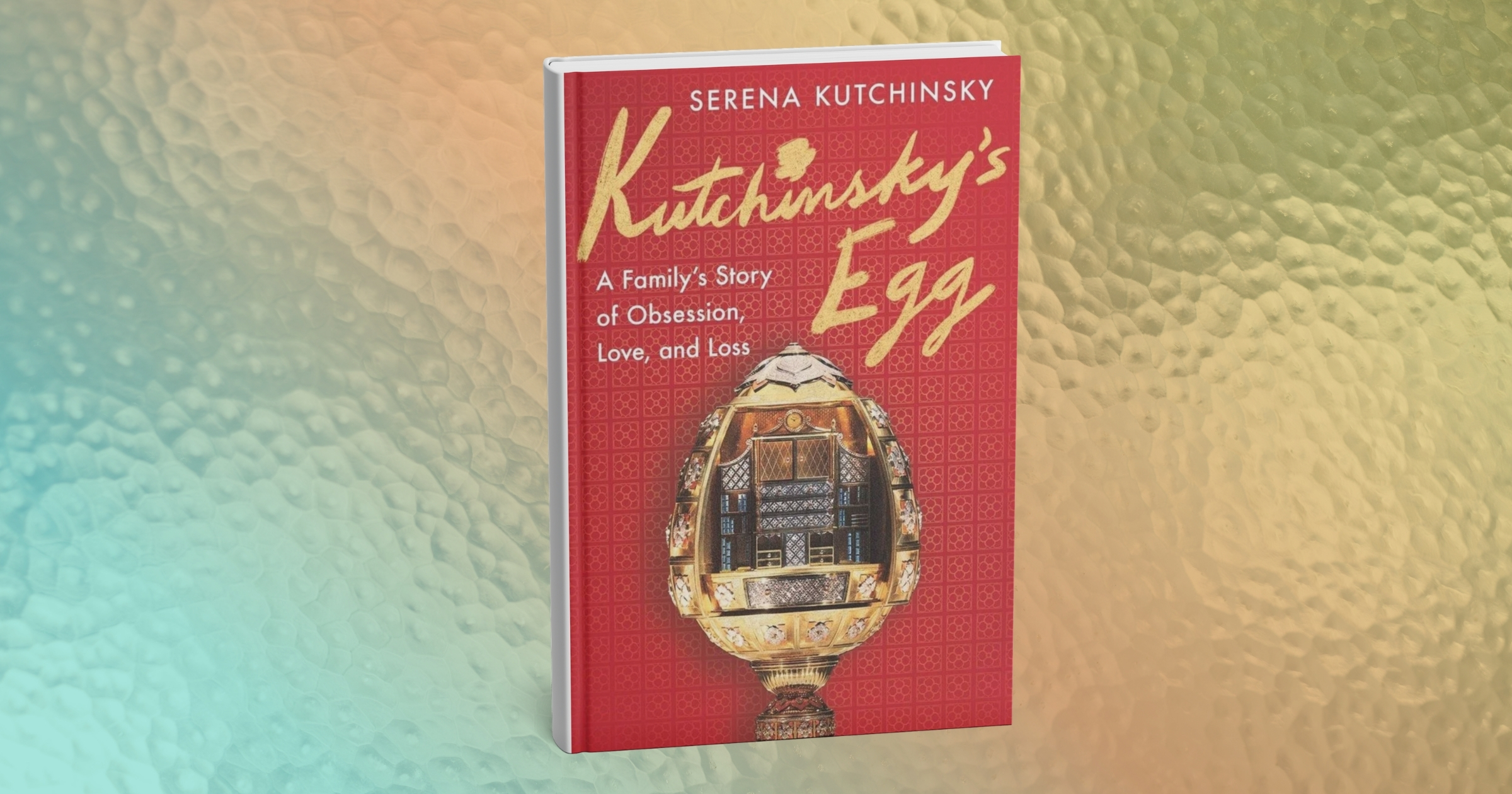
Kutchinsky’s Egg: A Family Story of Obsession, Love, and Loss
By Serena Kutchinsky (Scribner)
The family saga at the heart of Kutchinsky’s Egg starts as a great Jewish immigrant success story. Fleeing pogroms, Hesh and Leah Kuczynski come to London, and, over the next few generations, their family builds an internationally renowned jewelry empire that served British royalty and celebrities such as Elton John and Elizabeth Taylor. That success, however, eventually crumbles under the weight of one person’s ego.
That may be a tragedy for the family, but it also makes for a fascinating story. The investigation into the family business by award-winning British journalist Serena Kutchinsky, Hesh and Leah’s great-great-granddaughter, delivers on the book’s promise of “obsession, love and loss.”
In the late 19th or early 20th century, the Kuczynskis (later Anglicized to Kutchinsky) left their home in Grabow, Poland, intending to reach the Goldene Medina of America. Their plans fell through—either because their tickets were forged and only took them as far as London, or because the United States restricted immigration due to a cholera outbreak. Kutchinsky writes about her family settling into London’s Jewish East End: Hesh and his son, Moshe Arron (renamed Morris), started a home-based watchmaking and repair business. After Hesh dies, Morris expanded the business into jewelry and founded MA Kutchinsky, Ltd. The store prospered, particularly after Morris’s son Joseph, or Jo, took over.
“By 1957, the firm had outgrown the East End,” Kutchinsky writes. “Jo was adamant that the key to success wasn’t making one-off pieces but honing a signature style that would be accessible to Britain’s burgeoning middle class and set them apart from their European rivals. This was how the House of Kutchinsky made its name.”
By the time Jo’s son Paul (the author’s father) took over, the company had established a reputation for quality and distinctive, whimsical designs. But Paul was obsessed with Peter Carl Fabergé and the famous eggs he created for the Russian imperial family. A spectacular jeweled creation of his own, Paul felt, would catapult his company into the international stratosphere occupied by Cartier and Bulgari.
In partnership with Australia’s Argyle Diamond Mining Co., Paul created an egg more than two feet tall—the size of a small child—with 33 pounds of 18-carat gold and 24,000 pink diamonds. Known as the Argyle Library Egg, it opened to reveal a rotating miniature library and portrait gallery and was valued at about $12.5 million.
But no one bought it. Its creation coincided with the first Gulf War in 1990, a time when some of the Kutchinskys’ oil-rich Middle Eastern clients were less likely to be interested in such baubles.
Paul had to relinquish the egg to Argyle, which had helped finance the project. In 1991, unable to recover from this and other losses, Kutchinsky Ltd. was sold. Paul went on a downward spiral of alcohol and drugs that culminated in his death in an automobile accident at age 50.
But what set his daughter on her journey of discovery was a mystery: the whereabouts of the egg. It had vanished from record after Argyle sold it to a collector.
Her search makes for an engaging narrative, taking readers around the world and through underhanded deals, arrests and even allegations of smuggling. This is indeed a gem of a book. But like even the finest diamonds, there are a few flaws. For example, I could have used less of the author’s personal proclivities, such as the night she spent in a “thinly lit BDSM-theme bar” in Tokyo.
Nevertheless, it is fascinating to follow the author’s persistence as she tracks down her father’s creation. The result is an entertaining and often surprising journey into a family’s history—and the afterlife of one very extravagant egg.
Curt Schleier, a freelance writer, teaches business writing to corporate executives.
 Facebook
 Instagram
 Twitter


Leave a Reply