



Books
Fiction


REVIEW: ‘Late Blossoms’
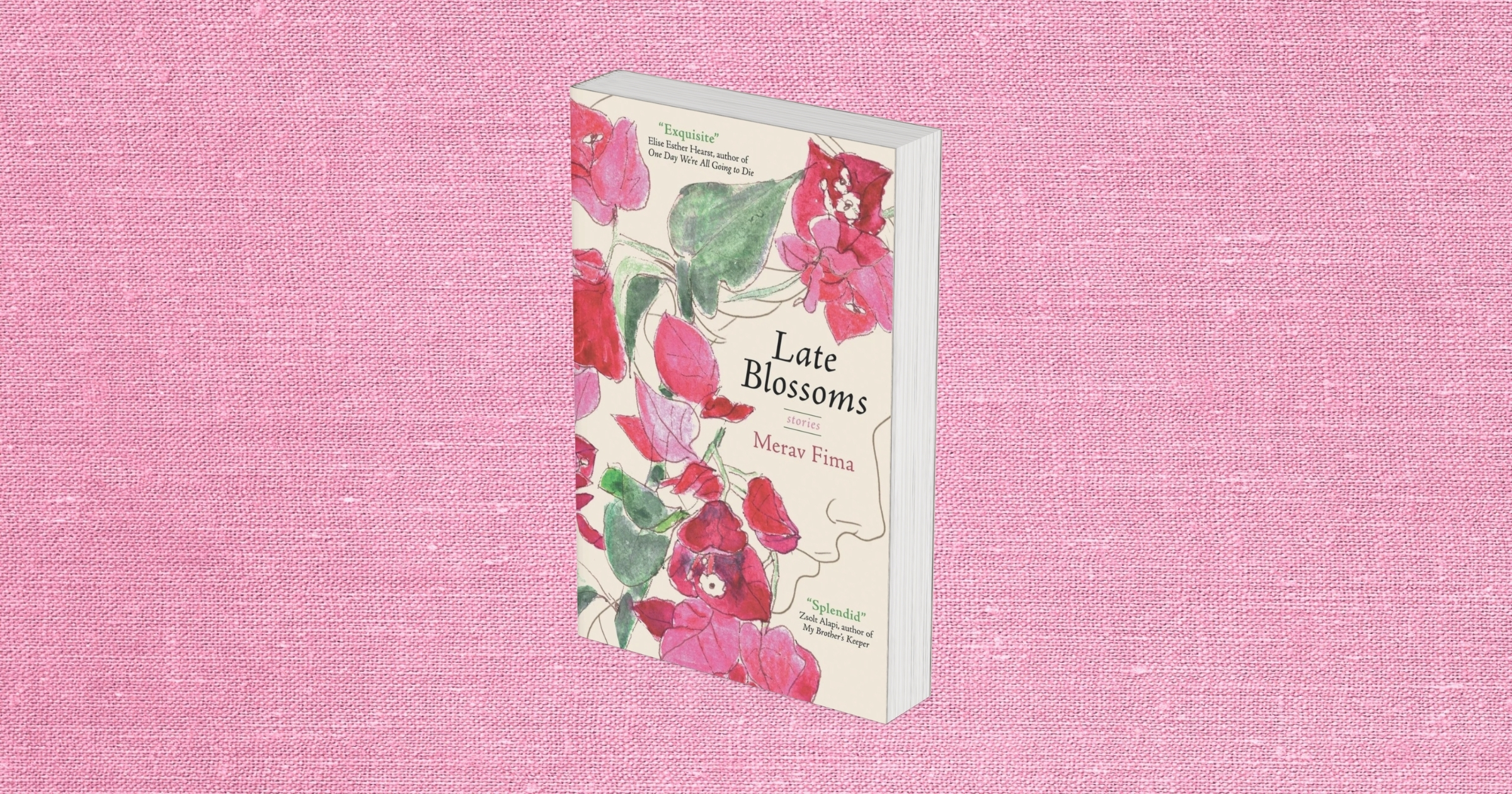
Late Blossoms
By Merav Fima (Vine Leaves Press)
Celebrated artist Anna Ticho famously once said, “It wasn’t I who chose Jerusalem as the subject of my work; rather, Jerusalem chose me.”
Just a few pages into Late Blossoms, it is clear the same could be said about Australian writer, translator and literary scholar Merav Fima. Her debut, a collection of 10 linked short stories, is set in a beautifully realized, lyrical Jerusalem. Most feature fictional encounters between real-life women who impacted Israel’s emerging literary, artistic and cultural scene. Those women include Ticho, a painter; and poets Rachel Bluwstein-Sela (called Rachel the Poetess) and Zelda Schneurson Mishkovsky (known as Zelda).
“I have taken poetic license in constructing the encounters between them, in order to explore their most profound emotions and experiences as women and as migrant artists,” Fima explains in her introduction.
Inspired by these historical figures as well as by Virginia Woolf’s A Room of One’s Own, which features a fictional meeting of four great English female novelists, the collection imagines intimate crossings of lives and ideas, paying homage to women whose paths to artistic recognition were gnarled and uncertain, like the olive trees scattered across Jerusalem’s hills.
The title story follows Anna Ticho as she struggles to draw artistic inspiration from the stark Judean Hills while hosting salons for the city’s cultural and social elite inside her home, where conversations about art and life unfold over slices of her homemade Sachertorte. Indeed, six of the stories, set between 1925 and 1967, feature these gatherings in the house she shared with her renowned ophthalmologist husband, Dr. Avraham Ticho. Today, their much-visited house is owned and maintained by the Israel Museum.
In “Locked Garden,” readers meet Rachel Bluwstein-Sela, a poet on the cusp of recognition yet shunned by her peers because she has tuberculosis; she is nevertheless welcomed by Anna Ticho. A young Zelda Schneurson Mishkovsky enters the narrative in “Enchanted Bird,” where she yearns to reconcile her family’s religious observance and her obligations as a descendant of the Lubavitch Hasidic dynasty with her own poetic ambitions.
The collection explores how these women wrestle with different issues, from childlessness to unrequited love, yet all contend with the misogyny of the male-dominated literary and artistic establishments.
Fima’s prose plays with the color, textures, scents and sounds of Jerusalem, from ripe fruit and vegetables in the Machaneh Yehudah market to the soft fuchsia petals of bougainvillea, the earthy scent of drying oil paint to the German-inflected Hebrew some of the women spoke.
Deeper questions about identity, homeland and sisterhood stitch the stories together. All the while, the women draw inspiration and sustenance from a landscape that first appears barren but gradually reveals itself to be as rich and varied as the garden surrounding the Ticho home.
Cathryn J. Prince, a freelance journalist, is the author of For the Love of Labor: The Life of Pauline Newman.
 Facebook
 Instagram
 Twitter

Leave a Reply