




American View
News + Politics


All Are Welcome at the Park Slope Food Coop, Except Zionists
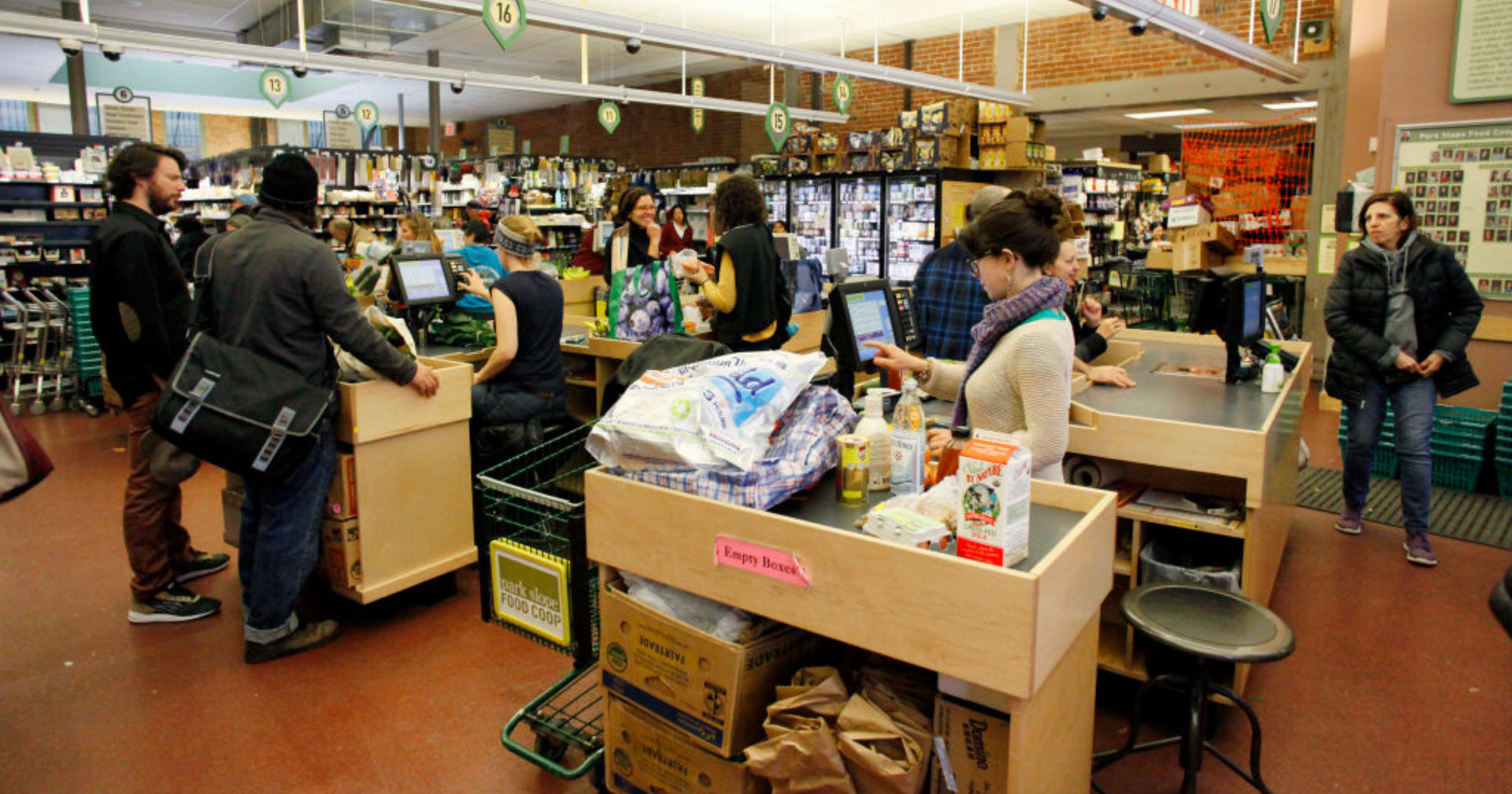
“Take a carrot,” instructs the entrance worker as you swipe your membership card at the Park Slope Food Coop. As a loyal member of the Coop for 20 years, I would dutifully take a laminated orange card depicting a carrot, hang it on my shopping cart and head into the store to shop.
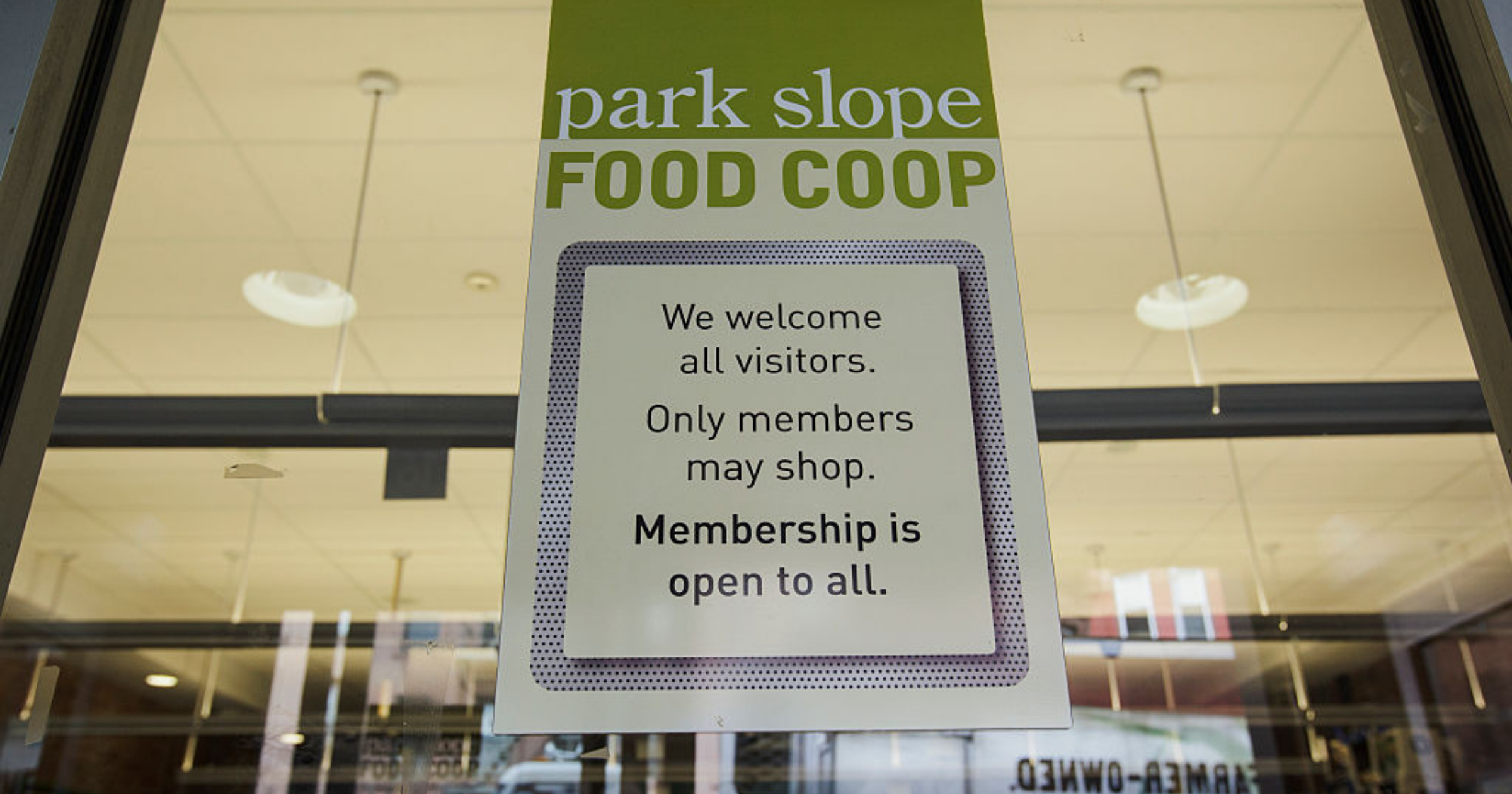
The carrot card is one of the many quirky policies and rituals that makes the Brooklyn-based Coop unique. With 17,000 members, the Coop is the largest cooperative grocery store in the country that requires members to work in the store in order to shop. And now, because of a recent vote to boycott products made in Israel, it is perhaps the most controversial.
As any member will tell you, the Coop’s success lies mainly in its produce aisle, which features a selection of gorgeous fresh fruits and vegetables, most organic, most locally sourced, at reasonable prices.
To become a member, you need to pay a one-time $25 joining fee, a $100 refundable equity investment and work in the Coop for approximately three hours every few weeks. For the past few years, I have been a check-out worker, scanning UPC codes, weighing veggies and tallying the bill.
Although I, like most Coop members, grumbled about doing my shift, it was worth it. And not just because the tomatoes were like sugar and the organic avocados were cheap. A guiding principle of the Coop is “to make the Coop welcoming and accessible to all and to respect the opinions, needs and concerns of every member.” And I believed that.
The Coop felt like a small town where people wanted to help one another. Forgot your debit card? A fellow shopper-member will immediately volunteer to pay for your groceries. Not sure how to prepare that weird-looking mushroom? Ask the woman who has one in her cart. Shopping at the Coop made me feel like I was part of a community working together to do the right thing.
The Coop’s idealistic culture also makes it the object of much eye-rolling in my neighborhood and satire in the media, especially when real world problems clash with the Coop’s progressive ideals. But debates over unionization, recycling and the pension fund were just background noise to me.
There was, however, one issue I could not ignore: the growing drumbeat of members pressuring the Coop to adopt the anti-Israel Boycott, Divestment and Sanctions (BDS) platform. Flare-ups of anti-Israel agitation erupted every few years, but they were always squelched, much to my relief.
Everything changed after October 7, 2023. Newly emboldened and riding the wave of intense antisemitism and anti-Israel sentiment, a group called the PSFC Members for Palestine implemented a campaign to sway opinion within the Coop. They took over the Coop’s key committees, allowing them to elevate and pursue their agenda through the Coop’s complicated decision-making processes.
My shopping trips became stressful affairs. Instead of feeling community, I felt unwelcome and uneasy. People wearing keffiyehs and shirts with anti-Israel slogans became commonplace. I felt the need to broadcast which side I was on, since there were now “sides” at the Coop. I began to wear a shirt emblazoned with a huge Star of David whenever I shopped or did my check-out shift. Some people called me brave and whispered that they liked my shirt. Others gave me dirty looks.
I joined Coop for Unity, a group of members formed in response to the boycott threat. We pleaded for respect for all members, pointing out that the boycott group was tearing the Coop apart. We wore “Save Our Coop” buttons picturing a little heart shaped out of two intersecting carrots. A core group organized and strategized. Our WhatsApp chat exploded as our concerns mounted.
In the last few months, the situation worsened. At a recent general membership meeting, someone spoke of Jewish supremacy and was cheered. BDS supporters stood outside the Coop daily and yelled “you support genocide” at those of us handing out flyers against the boycott
The issue finally came to a head at the membership meeting on May 26, where the vote to boycott Israeli products was on the agenda. The three-hour Zoom meeting was painful. The anti-Israel group presented its lies and distortions about Israel unchallenged because no counterproposals were permitted. All we could do was furiously text one another in our WhatsApp chat. About 8,000 people registered for the meeting, but there were significant technical glitches, and hundreds of people dropped off or perhaps were unable to vote. When the votes were finally tallied, it wasn’t even close: 4,551 in favor of the boycott, 2,083 opposed. I felt physically ill.
That night, I resigned from the Coop and asked that my initial $100 investment, given 20 years ago, be returned. By the next day, the Coop’s shelves were stripped of the handful of Israeli products that it carried, mostly Bamba, a couple of haircare products and a few brands of tahini, including one brand owned by an Arab Israeli woman and another that employs a diverse workforce of Muslims, Jews and Druze. All that effort to remove so few products. But it was never about the products themselves. It has always been about the delegitimization and erasure of Israel.
The boycott may have long-term financial consequences for the Coop. Members unhappy with the decision are considering their next steps, whether that is resigning, suspending their membership or staying to fight to overturn the boycott. The Coop, already facing New York State discrimination complaints and a cease-and-desist letter, may face lawsuits for potential violation of human rights laws.
As for me, the boycott vote was a watershed moment. I feel sad and deeply unsettled by the effectiveness of the anti-Israel rhetoric and how little my fellow Coop members cared about their Jewish neighbors.
Lisa Smith is the Chief Planned Giving & Estates Officer at Hadassah, The Women’s Zionist Organization of America, Inc. An attorney by training, Smith is a dual American-Israeli citizen and has worked for Hadassah since 2008. She lives in Brooklyn, N.Y., with her family.
 Facebook
 Instagram
 Twitter
Michelle Rennert says
Brava , Lisa.
Irvin Schonfeld says
I understand the writer’s motive for quitting but I think quitting is counterproductive. If a member quits, the member can no longer vote in an election for the directors or in a referendum. The former member cannot vote on a host of future proposals.
If entering the Coop is makes you feel badly about being present at the Coop, then take a position in which you don’t have to enter the building, like taking a work slot at CHIPS.
Rachel says
A friend of mine told me about a similar scenario at the Co-op where she lives. There’s been a push by the employees and a lot of the members to eliminate Israeli products since 2023. There was a vote recently, and it was very close. It was almost a 50-50 split. My friend had canceled her Co-op membership and was not able to vote and was distressed. She emailed the Co-op to ask what products they carry from Israel. The response she got was that they carry hardly if any product from Israel because their focus is on local products. However, Stand With Us provided a list of several products that were available for purchase at the Co-op. One of them being fair trade olive oil that was produced from a cooperative of Arab and Jewish women working together. Thankfully, the boycott did not succeed.
Claire Sullivan says
BDS was established long before the Oct. 7 massacre. The political split among our American Jews, has weakened whatever voice we might have. There are about 7,000,000 million Jews in Israel out of a population of 10,000,000. Israel is surrounded by about 300,000,000 Muslims in the Middle East Countries.
I went to Union Temple at Grand Army Plaza over 90 years ago (I am 96 years old), where we learned the history of a proud people, small in number but amazing in accomplishments. Even then we were aware that the classical antisemitism had come to America as it had existed globally. The why, in my mind, has never been answered. Every Jew and every rightous Gentile should resign from the Coop.
Claire Sullivan, Wilmington DE
Leslie Pearlman says
All Jewish members should leave. The savings should not compel people to stay and support an organization that I wouldn’t trust, or to support BDS and propaganda!!!
Diane Salzman says
Lisa,
I am both saddened and angry about this situation. As an attorney, do you think there will be legal challenges to this? Please keep us posted on the progress/outcome of this. Thank you.
andrew zeidman says
i produced the food distribution event last week. i spent several 1000 dollars of my own money to give out for free those products boycotted. i brought amazing speakers and the optics of islamic allies giving out bamba and other products to those disgusting hipster white supremacist racists was tremendous. i was dismayed by the arrogance of those members and received alot of pushback for helping rather than a simple fukkn thank. you
Jean Thaler says
I lived in Brooklyn 22 years. This anti-Israel boycott at the Park Slope Food Coop really upsets me. I stand with Israel!
Ethel Guttenberg says
Unfortunately, the only goals of Hamas. Hezbollah and Iran are to destroy Israel and kill all Jews. Most of these people are simply uninformed as to who is really committing the horrific crimes, they accuse Israel of.
Gail P. Taback says
My hat if off to you. You made a good decision to resign from the coop. If enough Jews and their allies did so, antisemitism wouldn’t be reigning so supreme. Trader Joe’s has been pressured to stop carrying Israeli products but they have not given into it. I support them by shopping there as much as I can and buying the Israeli products. Thank you for standing up for Jews and for israel.
Stephanie Miles Beaudett says
This is awful. Are there enough members who are boycotting to open their own coop?
Ruth Gursky says
Todah rabah, Lisa, for this excellent article…& for the record, many like-minded NYers were very unhappy with this turn of events at your coop
BenJamin Schaeffer says
As a Jewish-American Zionist born in Manhattan and raised in Brooklyn, NYC my family and I have a LONG association with Food Co-ops.
My family were members of the Flatbush Food Co-op and I grew up shopping there. My Israeli Boyfriend and I were BOTH members of the Park Slope Food Co-op, and my (now) ex-husband and I were both members of the 4th Street Food Co-op when we lived in the East Village/LES until I moved out to the Bay Area 22 years ago.
What the Park Slope Food Co-op has done is MONSTROUSLY bigoted and Anti-Semitic.
As a former member, I am % DISGUSTED!
Roberta Zucker says
totally ridiculous and very sad that lies about Israel are so easily believed.