



American View


A Snapshot of the Sephardic American Experience
Rabbi Marc Angel grew up in Seattle’s tightknit Sephardic community, the grandchild of Jews from Turkey and Rhodes. Like most of their generation, his grandparents spoke Ladino at home. When Angel arrived in New York City in 1963 as a freshman at Yeshiva University, he encountered a completely different Jewish world.
“I never saw chopped liver or gefilte fish before, never saw the stuff,” said Angel, now 80 and rabbi emeritus of Manhattan’s Congregation Shearith Israel, also known as the Spanish and Portuguese synagogue. “So my classmates said, ‘Are you Jewish?’ Because they assumed, ‘How could you be Jewish if you don’t know gefilte fish?’ ”
Most of America’s estimated 7.5 million Jews hail from Eastern Europe and Russia’s Pale of Settlement. Their ancestors spoke Yiddish and suffered through pogroms and the Holocaust.
But around 591,000 adult Jews, 10 percent of the country’s adult Jewish population, according to a recent study, have a different history. For many, their stories harken back to the Golden Age of Spain and the expulsion of 1492 and, for some, a second forced dispersion in the 20th century from their homes in North Africa and the Muslim-majority nations of the Middle East—nearly one million people displaced, entire communities destroyed.
These are the Sephardim, a minority within a minority who have largely been overshadowed by the majority Ashkenazi community, despite the success of high-profile personalities, including entertainers like Law & Order actor Jerry Orbach and pop singer Paula Abdul, and historical figures such as early 20th-century Supreme Court Justice Benjamin N. Cardozo and 19th-century poet Emma Lazarus. Like other American Jews, most arrived as refugees, forced to carve out new lives for themselves and their children by working hard, learning English and becoming “American.”
In fact, the first Jews in America had their roots in Spain, which expelled its Jews beginning with the Inquisition in 1492, and Portugal, which followed suit in 1497. From those countries, the Jewish Diaspora spread south to North Africa, east to Greece, Turkey and the Middle East, and west to the Caribbean and the Americas. These Sephardic Jews (from Sefarad, Hebrew for Spain) mostly spoke Ladino, a variant of Spanish influenced by Hebrew and Aramaic.
In 1654, a group of 23 Jews from the then-Dutch colony of Recife, Brazil, who were fleeing the Inquisition after its occupation by Portugal, established the first Jewish congregation in America—Angel’s own Shearith Israel. Until the early to mid-19th century, Sephardim were the majority among American Jews. By the end of the 19th century, however, their numbers were eclipsed first by Ashkenazi immigrants from Germany and Central Europe, and then, from 1880 to the 1920s, by the mass wave of Jews from Eastern Europe and the Russian Empire.
Fast-forward 50 years, to the middle of the 20th century, when Jewish refugees began arriving from North Africa and the Middle East. Many fled out of fear or were expelled from Muslim-majority, Arabic-speaking nations—Syria, Iraq, Libya and Egypt among them—after the creation of the State of Israel. In the years since, Israeli Jews with North African or Middle Eastern heritage have also immigrated to the United States. These Jews tend to call themselves Mizrahi, meaning “from the East,” rather than Sephardic, though the two terms often are used interchangeably—or with Sephardic sometimes used as an umbrella term. Many Mizrahi Jews hail from communities that never left the Middle East after the Babylonian exile of Jews from Jerusalem.
Researchers and activists working with the Sephardic community in the United States have long been frustrated with the lack of real data about this population. It was certainly frustrating to Sarah Levin, executive director of JIMENA, a San Francisco-based nonprofit that educates about and advocates for Jews from the Middle East and North Africa.
“For years, people have been asking about numbers,” she said. “What percentage of the Jewish American population are Sephardim? We didn’t have that data. Particularly agencies who operate in cities where there are large populations of Sephardic and Mizrahi Jews, there was no rigorous, quantitative information to help us understand who we are.”
To remedy that, JIMENA commissioned the first national study specifically focused on Sephardic and Mizrahi Jews. Conducted by sociologist Mijal Bitton and her research team at New York University’s Wagner School of Public Policy, in cooperation with the Cohen Center for Modern Jewish Studies at Brandeis University, “Sephardic & Mizrahi Jews in the United States: Identities, Experiences and Communities” was released in 2025.
The results put the number of adult Sephardic and Mizrahi Jews in the United States at 10 percent of the overall Jewish adult population. Major population centers include the Syrian Jews in Brooklyn and Bukharian Jews in Queens, N.Y.; Iranian, or Persian Jews, in Los Angeles; Turkish Jews in Seattle; and Cuban/South American Jews in South Florida, many of whom claim Sephardic roots.
The study also teased out the main features of Sephardic-Mizrahi identity and expression, showing how the various communities are similar to, and distinct from, those of the majority Ashkenazi culture.
That, to Levin, is its main value. “People don’t know really what it is to be a Sephardic Jew,” she said, “how Sephardic Jews observe differently, how we relate to denominational Judaism, what it means to be traditional but still flexible and adaptive to the surroundings around you.”
The study found that Sephardic and Mizrahi Jews share many characteristics, despite hailing from multiple countries. They tend to be more socially and politically conservative than their Ashkenazi counterparts and more economically vulnerable. They intermarry less often (25 vs. 36 percent) and more regularly say that Israel is “somewhat” or “very important” to them (a combined 77 vs. 69 percent). Experts believe these results are more or less consistent across all generations.
Sephardic and Mizrahi Jews, whose observance is generally traditional, tend to eschew denominational labels. Many report that encountering Reform, Conservative and Orthodox synagogues in America was confusing and alien to them. Rather than trying to integrate, they built their own synagogues and day schools to preserve Sephardic liturgy and customs, although younger generations are more integrated with Ashkenazim.
Sticking close to home, maintaining a strong family life and ties to one’s own community is paramount among this population, the study found.
Bitton said these characteristics evolved from how Sephardic and Mizrahi Jews’ historical experiences differed from those of Ashkenazim. Their lands of origin never held out the option of emancipation, which is what propelled Ashkenazi Jews in America to seek acceptance from the non-Jewish majority culture.
“What made America golden was not that Jewish life could be transformed but that it could be preserved,” Bitton wrote in the winter 2026 issue of the Sapir quarterly journal. “What they craved above all wasn’t freedom or social acceptance. It was stability and continuity, the opportunity to continue the life that they had led for generations.”
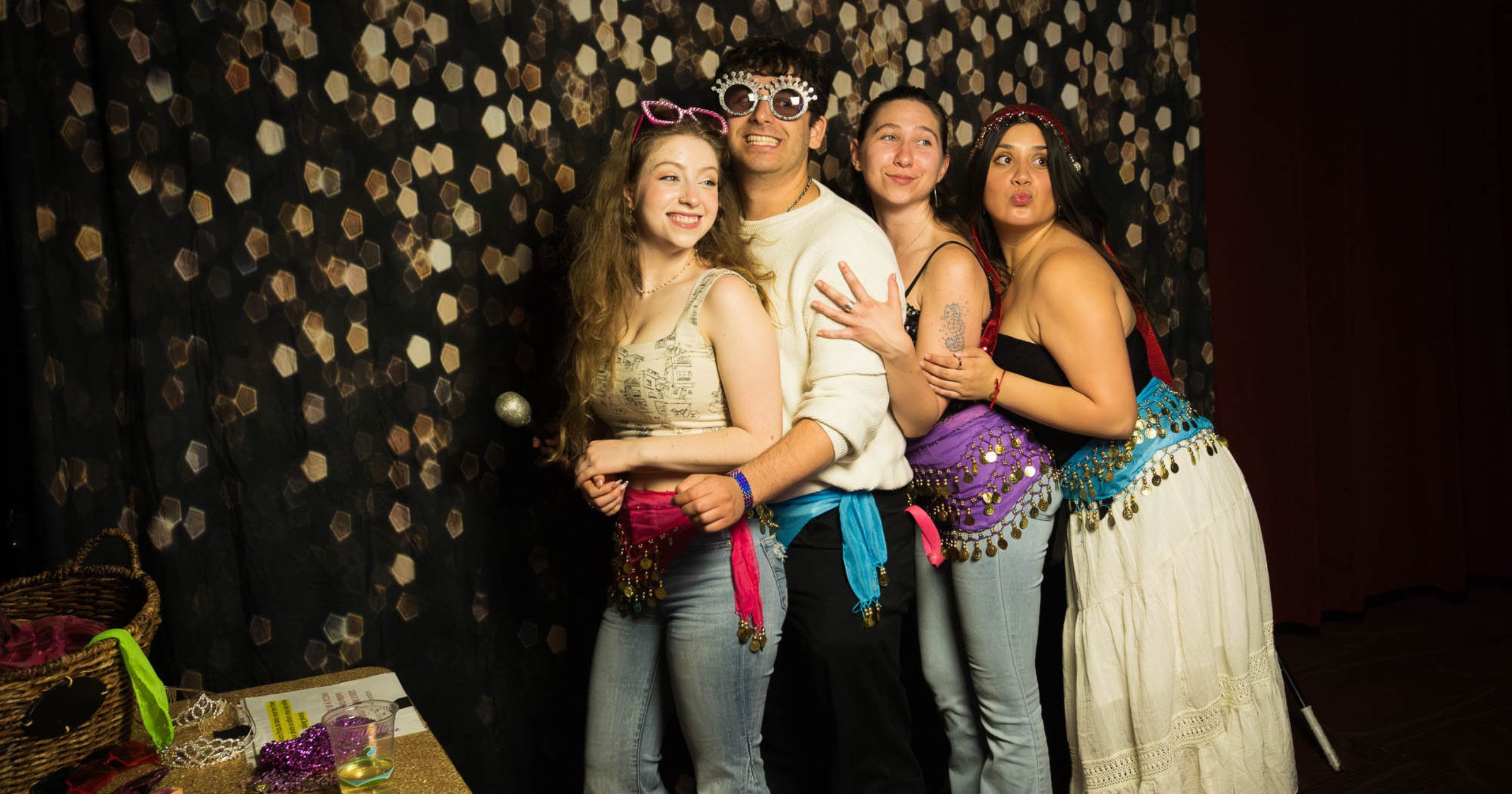
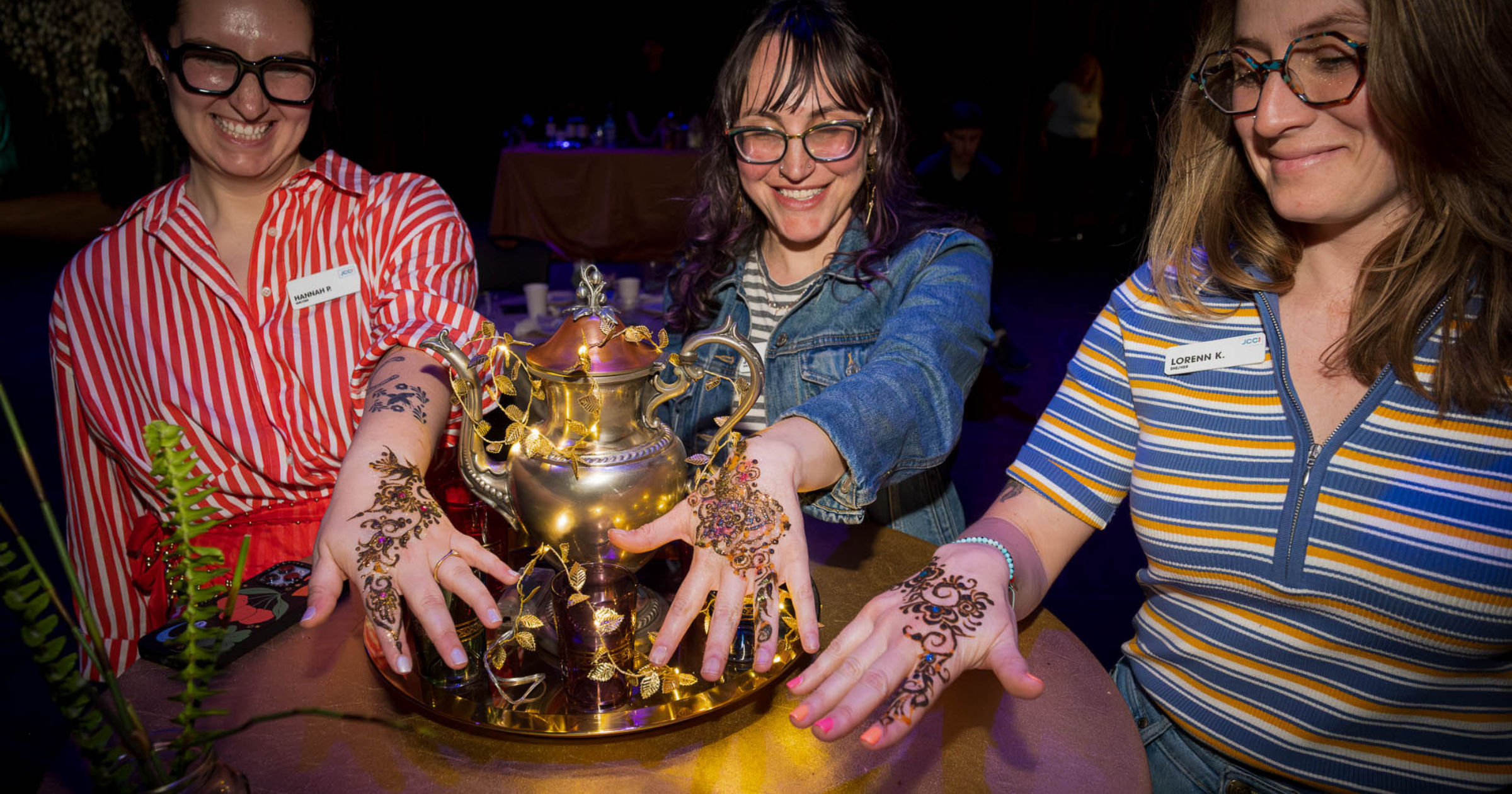
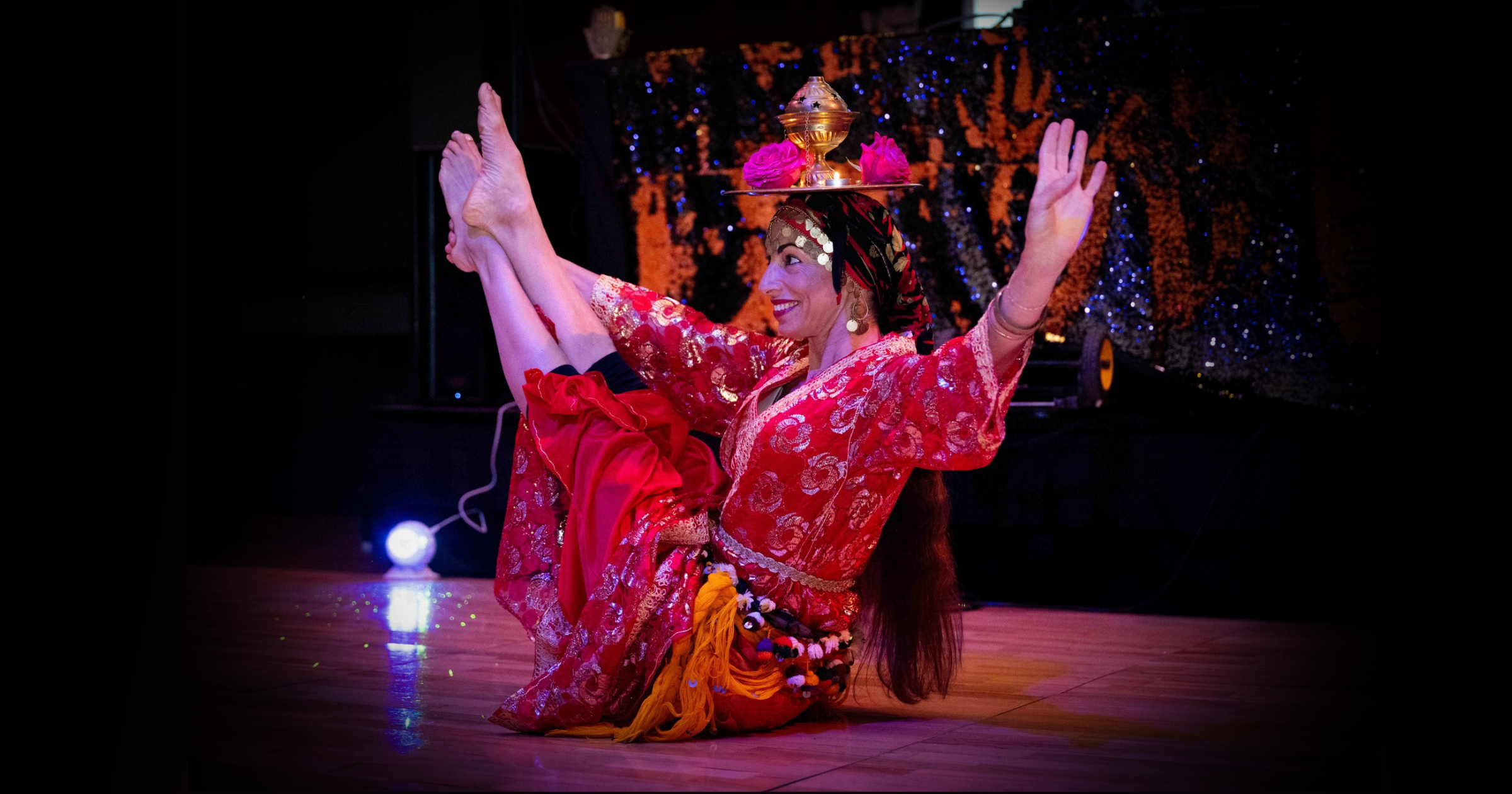
In recent years, distinctly Mizrahi culture has been having a moment, with interest in it only deepening. Mizrahi music, which combines Arab and Middle Eastern Jewish lyrics and melodies, and rituals such as henna parties and post-Passover Mimouna celebrations, are being embraced by some elements of Ashkenazi Jewry as well as by a new generation of Sephardic and Mizrahi Jews. While their parents and grandparents kept their culture largely to their neighborhoods, the grandchildren are publicly reclaiming that heritage.
In her Sapir essay, which is titled “The Future Is Sephardic,” Bitton suggests that mainstream Ashkenazi Jewry might take a page from the Sephardic experience and, she writes, “choose continuity over acceptance” and “trading the integrationist ethos for a more preservationist one.”
She advocated four courses of action: reinvesting in the Jewish family as the center of Jewish education and identity; committing to Jewish peoplehood, which means seeing ourselves as inextricably connected to Jews around the world; not over-intellectualizing religious connection, but encouraging spiritual practices that allow wonder and reverence; and “cultivating a thicker skin, an American Jewish confidence robust enough that we do not need to be cool or liked by the surrounding culture.”
Bitton and Levin said they hope the 2025 study will help bring Sephardic history into mainstream Jewish studies classrooms, too, beginning in Hebrew school.
“I’d like to see an understanding of the emergence of the Sephardic centers of Jewish learning in medieval times, and then the Inquisition and the expulsion from the Iberian Peninsula,” Bitton said. There is little knowledge among American Jewry, for instance, of such global centers of trade and learning as Fez, Meknes and Marrakech in Morocco, or those in Muslim-controlled Andalus, Spain, from the 9th to 12th centuries.
“I feel sorry for any Jews who aren’t aware of the Sephardic Middle Eastern traditions,” Angel said. “They’re missing part of their own history and culture. Judaism belongs to all of us. And the more we are aware of the different kinds of Judaism, of Jewish practices, the greater we are as a people.”
The family stories of four Jewish women in this feature show how proud they are of their heritage and their determination to preserve special traditions. Follow the links below to read their individual profiles.
- Read Marlene Souriano-Vinikoor’s profile here
- Read Esther Chehebar’s profile here
- Read Orkid Sassouni’s profile here
- Read Penina Meghnagi Solomon profile here
Sue Fishkoff is a former editor of J. The Jewish News of Northern California and the author of The Rebbe’s Army: Inside the World of Chabad-Lubavitch and Kosher Nation: Why More and More of America’s Food Answers to a Higher Authority.
 Facebook
 Instagram
 Twitter

Leave a Reply