



American View


Southern Jewry’s Complicated Story
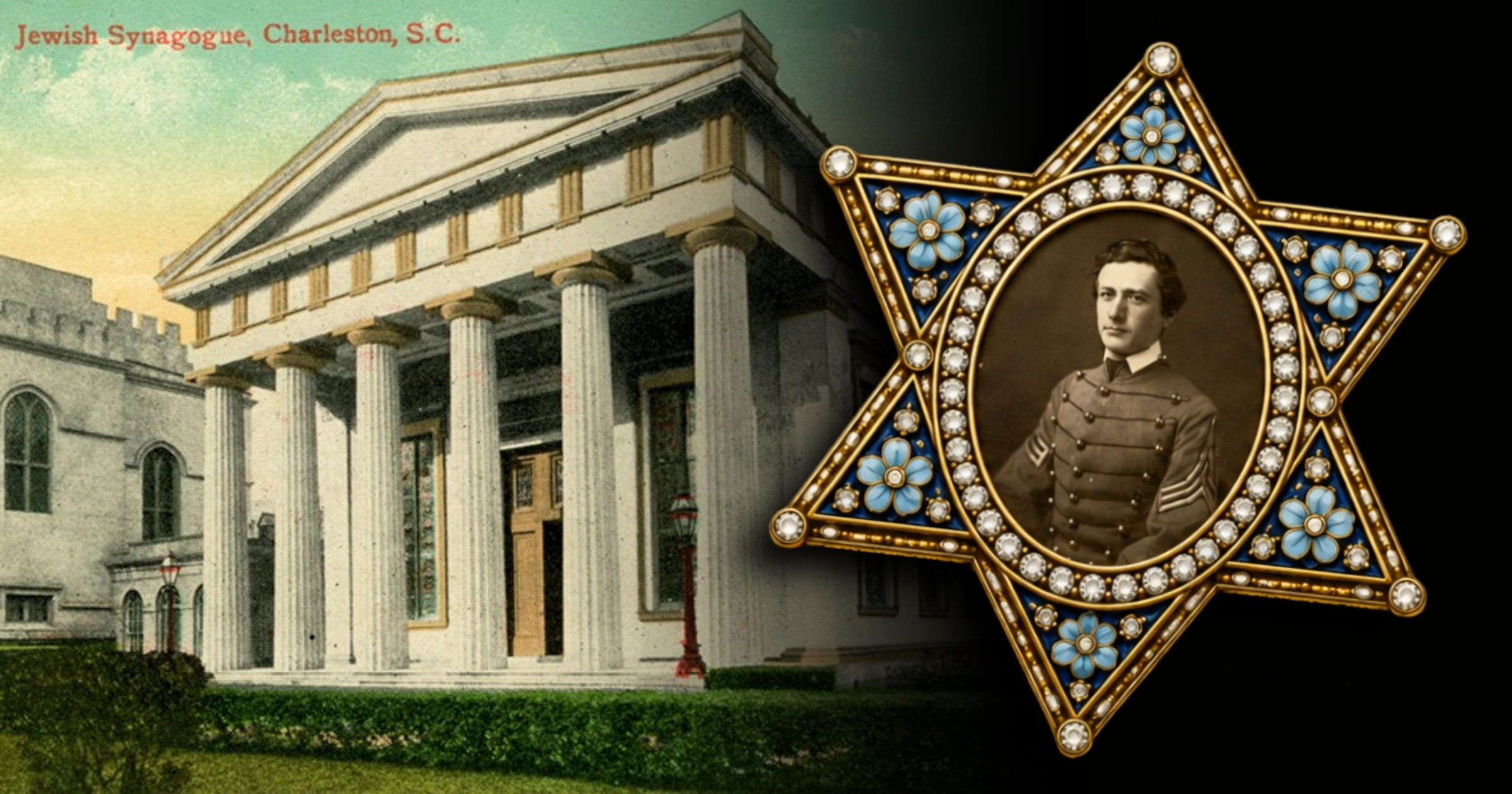
In 1794, Charleston’s Kahal Kadosh Beth Elohim (KKBE), one of the oldest Jewish congregations in the United States, completed its synagogue. The Georgian-style structure included a 75-foot spire that mimicked a larger one at Saint Michael’s, the nearby church.
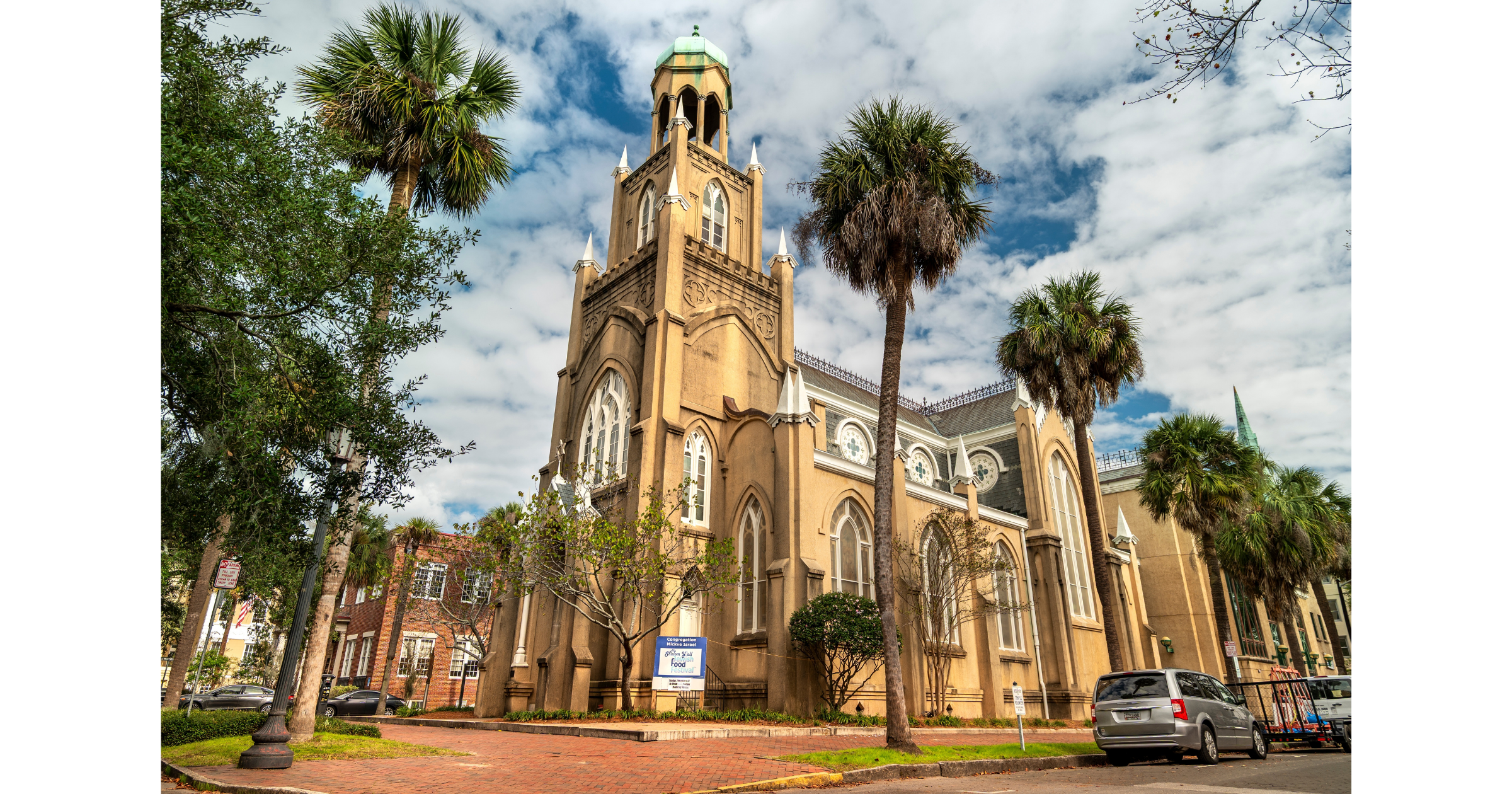
About 25 years later, at the consecration of Congregation Mickve Israel in Savannah, community member Dr. Jacob De La Motta, whose family traced their ancestry back to the Iberian Peninsula, asked the crowd, “On what spot in this habitable Globe does an Israelite enjoy more blessings, more privileges, or is more elevated in the sphere of preferment…?” Dr. De La Motta was so convinced of this sentiment, he sent copies of his speech to former Presidents Thomas Jefferson and James Madison.
In 1841, at a consecration ceremony for a second KKBE building, the previous one having been destroyed in an 1838 fire, Polish-born cantor Gustavus Poznanski declared, “This synagogue is our temple, this city our Jerusalem, this happy land our Palestine…. Our sons [will] defend this temple, this city, and this land.”
In transposing the sacred geography of the Land of Israel onto the South Carolina Lowcountry, Poznanski was expressing delight at the integration that Jews had achieved. The synagogue, constructed in the Greek Revival style popular among houses of worship around the country at that time, embodied a sense of belonging. And KKBE’s new building, with its shared architectural language, made that belonging visible to all.
As Jewish migrants from the Iberian Peninsula, Central Europe, Eastern Europe, the Ottoman Empire and elsewhere settled in the South in the 17th through 19th centuries, they founded societies and congregations, establishing a Jewish presence in the southern landscape. Yet their story was never one of simple belonging or accommodation. Their identities, livelihoods and communal lives, which included slave ownership, were shaped by the distinctive religious and cultural worlds of the American South.
In his influential 1941 book The Mind of the South, W.J. Cash described the South as “almost a nation within a nation,” formed by its agricultural history, history of slavery and habitation by people imbued overwhelmingly with Protestant theology.
Today, that sense of separateness remains central to the South—a region that can be defined by the borders of the former Confederate States of America: present-day Texas, Arkansas, Louisiana, Tennessee, Mississippi, Alabama, Georgia, Florida, South Carolina, North Carolina and Virginia.
In his book, Cash mentions Jews only in the context of prejudice: The Jew “is everywhere the eternal Alien; and in the South, where any difference had always stood out with great vividness, he was especially so.”
Nevertheless, congregations like KKBE and Mickve Israel served as vehicles for integration, mingling the look and practices of neighboring Protestant churches with Jewish worship and giving their congregants a veneer of public respectability by presenting their houses of worship as churches like any other.
Jews at that time were a tiny minority of the region’s population and largely dwelled in cities and towns. While some abandoned Judaism, most persisted in their differences, adapting them as needed, and they occasionally contested aspects of their Protestant-dominated society. For instance, when pious evangelicals enforced Sunday closing laws, there were Jews who ignored them. In Charleston in 1845, Solomon A. Benjamin faced charges for selling gloves on Sunday to a Black man. Benjamin appealed the charges on the basis of religious freedom but lost. The judge ruled that Christianity was part of the common law and the basis of morality.
At the same time, living in the South left marks on everyday Jewish practices and deeply held beliefs about human differences and dignity.
This perhaps can be seen most clearly in the participation of southern Jews in slavery. To be clear, Jews did not originate, innovate or dominate slavery in the Americas, but neither did they avoid or contest it. Rather, the slave economy was the arena in which they most integrated and acted as white southerners. In one communal example, the builders who worked on KKBE’s second edifice included two enslaved artisans, Kit and George (only their first names are recorded).
There were Jews who testified in criminal cases against enslaved people, and, as public officials, meted out their punishments. There were Jewish slave traders, auctioneers and brokers.
While most Jewish enslavers were merchants with only a few enslaved people in their households, there were exceptions. Barnet A. Cohen, a South Carolina planter, enslaved 35 people on 500 acres of land at the time of his 1839 death.
Some of the best evidence for Jewish slaveholding comes from wills. When Levi Sheftall of Savannah died in 1809, his will distributed specific people—Carolina, Cork and London, along with Sproucer and her children Rose, George, Venus, Jane and any children to come—to each of his sons “as his property forever.”
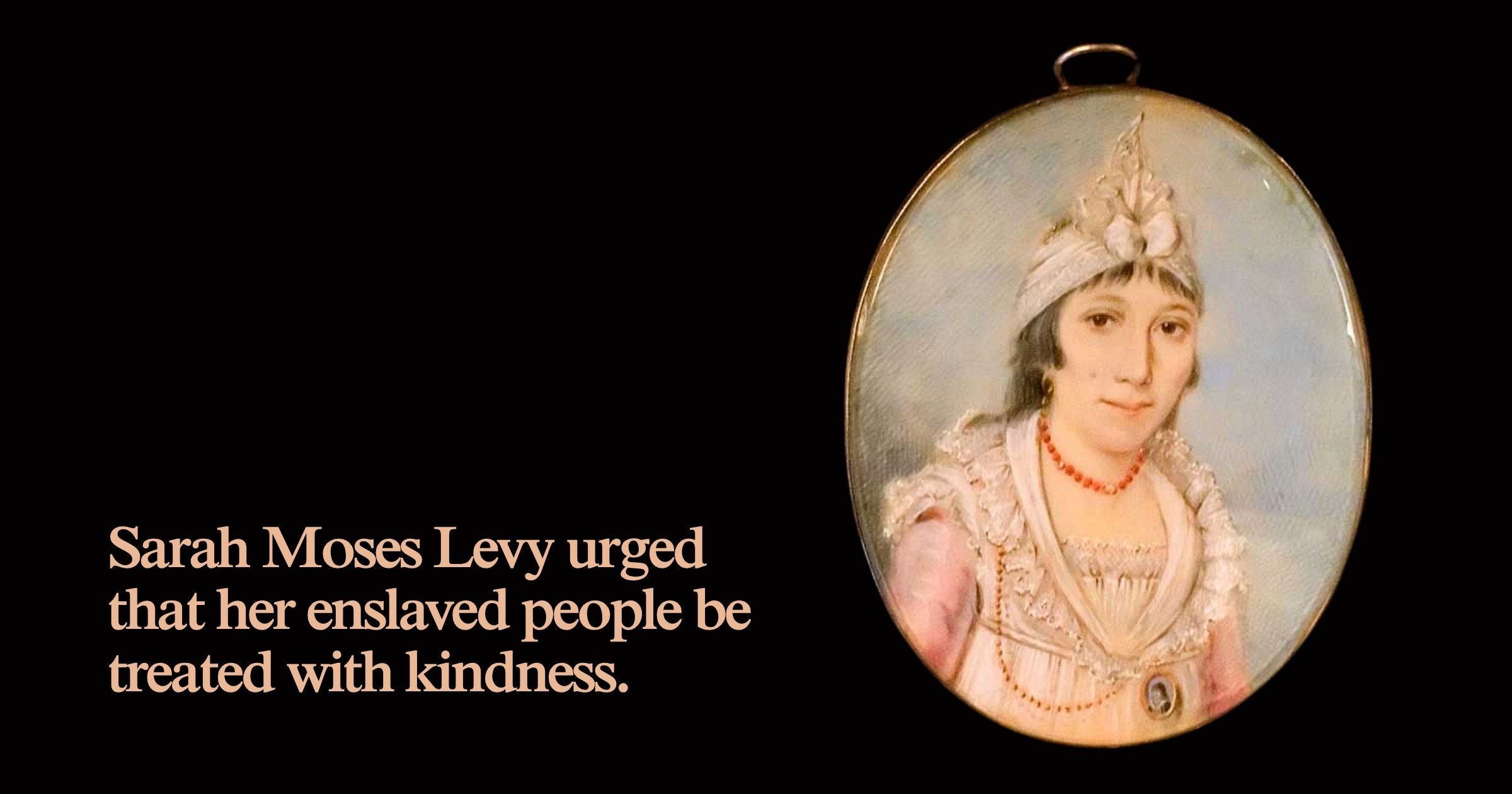
Other Jewish enslavers showed some recognition of Black humanity.
“It is my direction, desire, and earnest request,” Sarah Moses Levy of Camden, S.C., wrote in her will, “that old Kennedy shall be kept with his wife and each treated with kindness and reasonable indulgence.”
A small number of Jews arranged for the freeing of enslaved people. In 1796 in Charleston, Philip Hart’s will freed his slave Flora. In 1803, Isaiah Isaacs of Richmond provided for the freeing of Rachel, James, Polly, Henry and Williams. In so doing, he echoed the language of the nation’s founding documents, declaring that “all men are by Nature equally free.” Yet the recognition of that freedom did not prevent Isaacs from postponing its redress: The freeing of his slaves was to unfold over a 30-year period, with an additional 31 years for the children born to the women.
Despite its ubiquity, based on correspondence and diaries, slavery was rarely spoken about by southern Jews. Several factors likely stopped their pens, including personal ambivalence, concern about offending northern co-religionists if they supported slavery or Christian neighbors if they didn’t and the Christian tenor of the public debate over slavery.
The North Carolina-born Alfred Mordecai, who attended West Point and married Sara Ann Hays of Philadelphia, wrote from the North at the beginning of the Civil War: “This is the first time that I have attempted to express my opinions on this subject at any length, in writing, & I scarcely even speak of them.” Confronting the prospect of war, he described slavery as “the greatest misfortune and curse that could have befallen us.”
Even as Jews navigated slavery, they sought public respectability through their synagogues. Men like Poznanski, the Charleston cantor, worshiped in buildings partially constructed by enslaved people and embraced the comforts of the southern social order and ignored or accepted the injustices that made them possible.
Today, KKBE offers a model of how to begin grappling with that history. In 2021, the 500-family Reform congregation installed a plaque honoring the work of enslaved laborers who built the synagogue, acknowledging “the errors of the past.”
The Charleston Jews who worship in that building today—and the American Jews whose families and communities participated in slavery—are heirs to a history that holds two truths at once. Southern Jews built an enduring culture and community, but they did so at moral costs that went unspoken for a long time.
Shari Rabin is professor of Jewish studies, religion and history and chair of Jewish studies at Oberlin College and currently serves as vice president of the Southern Jewish Historical Society. She is the author of Jews on the Frontier: Religion and Mobility in Nineteenth-Century America, winner of a National Jewish Book Award and a Sami Rohr Prize for Jewish literature finalist. This feature is an adapted excerpt from her latest book, The Jewish South: An American History, a National Jewish Book Award finalist.
 Facebook
 Instagram
 Twitter

Leave a Reply