




Books
Non-fiction


REVIEW: ‘When We See You Again’
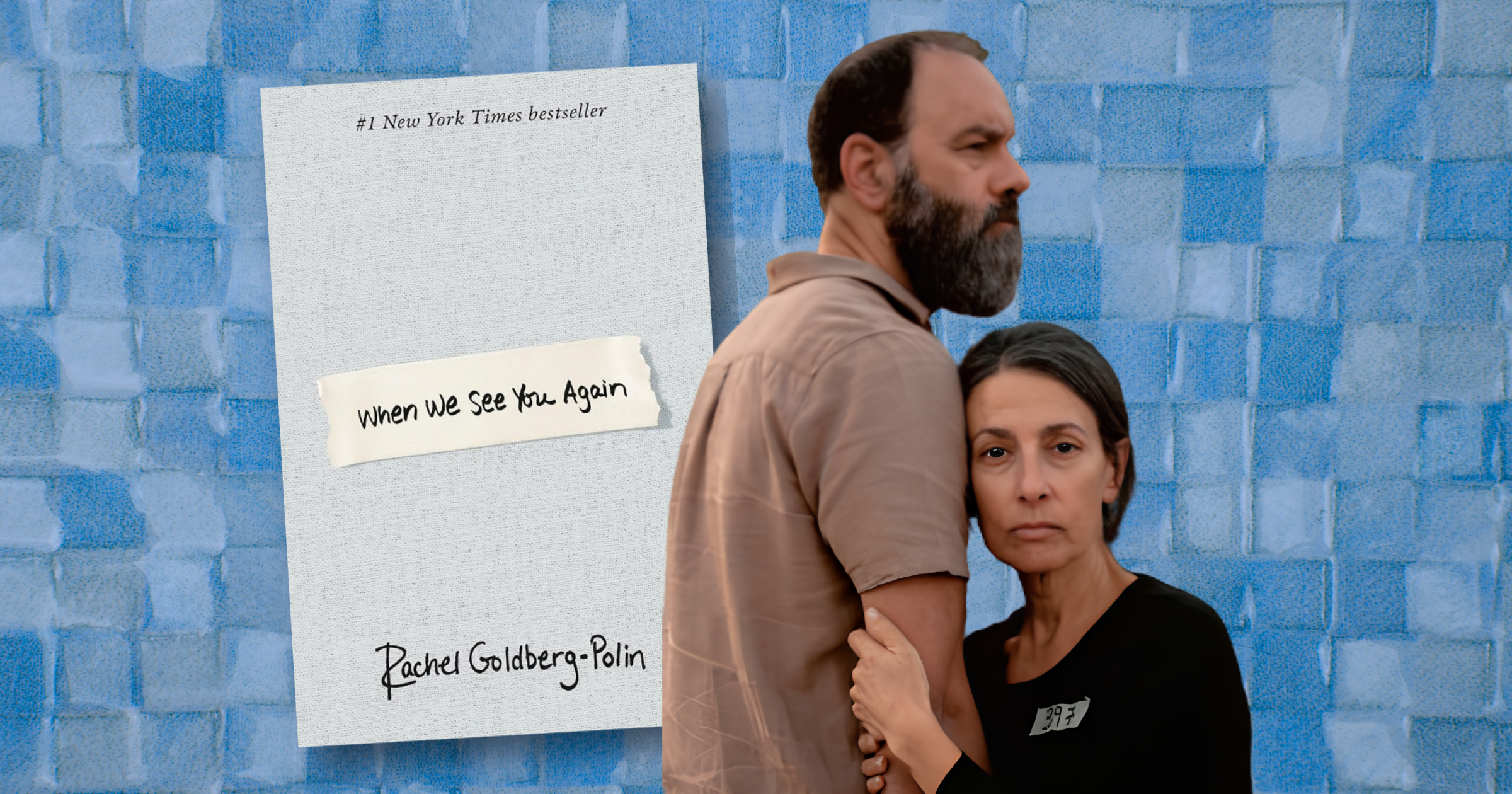
Israeli American Rachel Goldberg-Polin divides the world, and her new memoir, into “before” and “after.” Before is the time she lived a wonderful life in Jerusalem with her husband, Jon Polin, and their three children, grateful for all of it.
The after, for the few who may still be unfamiliar with her story, begins on October 7, 2023, when her only son, Hersh, then 23, was kidnapped by Hamas terrorists from the Nova music festival and taken to Gaza.
Nothing is the same again. Jon and she traveled the world, meeting with leaders and speaking out publicly, trying to set Hersh and the other 250 hostages free.
Almost a year after he was captured, he and five other hostages were executed in a tunnel beneath Gaza. They were returned to Israel in body bags. Hersh was buried in a Jerusalem cemetery with a forested view.
A part of herself, Rachel writes, was buried there as well.
For the readers of When We See You Again (Random House), there’s also a before and after—before reading her searing words, and after, when the world doesn’t feel the same.
A week after its publication at the end of April, the book reached No. 1 on The New York Times nonfiction best seller list. By now, many people have heard Goldberg-Polin’s voice in interviews in connection with the book. But to read the book is to go deeper into her pain and her love, both infinite.
The pain is relentless, pounding, stabbing, what she calls a “leaking wound”—not, as some well-meaning people might insist, something that will lessen with time. This is a brutal reality that she will always carry.
She records many details of her son, as though to preserve memory: His smell, the outlines of his face, the way he danced with ease.
As she reveals in the book, she learned important facts about Hersh’s time in captivity from some of the released hostages, and she found out that he heard her voice on the radio, that he knew that she and his father were battling on his behalf. That and other details bring her and Jon rare comfort.
Goldberg-Polin’s chronicle of pain is interspersed with her personal memories—growing up as an only child of parents who divorced when she was young; overcoming homesickness in summer camp (now she experiences what she calls “Hershickness,” a never abating “longing, yearning and desperate thirst for Hersh”); her earlier life with Jon in the United States. These vignettes provide glimpses into the life of a very private person who needed to become a public personality in an attempt to save someone she loves.
And she affirms her deep religious bent: She is certain that all of this happened for a reason, though one that she and we don’t (yet) understand.
Amid the grief and hallowed love, she does find hope. Goldberg-Polin is a self-described tragic optimist, borrowing the term from psychologist, philosopher and Holocaust survivor Viktor Frankl. She learned from one of the hostages in the tunnels that Hersh would quote Frankl about finding purpose: “When you have a ‘why,’ you can face any ‘how.’”
Still traveling around the world and talking about Hersh and the book, she and her husband are trying to figure out their “why.” In the book’s afterword, Jon directs that journey at their son: “We are determined to make your tragic death—not all deaths are tragic—a compass to guide our remaining moments here.”
Sandee Brawarsky is an award-winning journalist, editor and author of several books, most recently of 212 Views of Central Park: Experiencing New York City’s Jewel From Every Angle.
 Facebook
 Instagram
 Twitter

James Apesos says
I cannot imagine your pain and sorry. A grief that is never-ending that will even grow with time as the years pass. Your loss and memories, although unimaginable, effect all of us who care about humanity.