




Books
Fiction


REVIEW: ‘Fate’
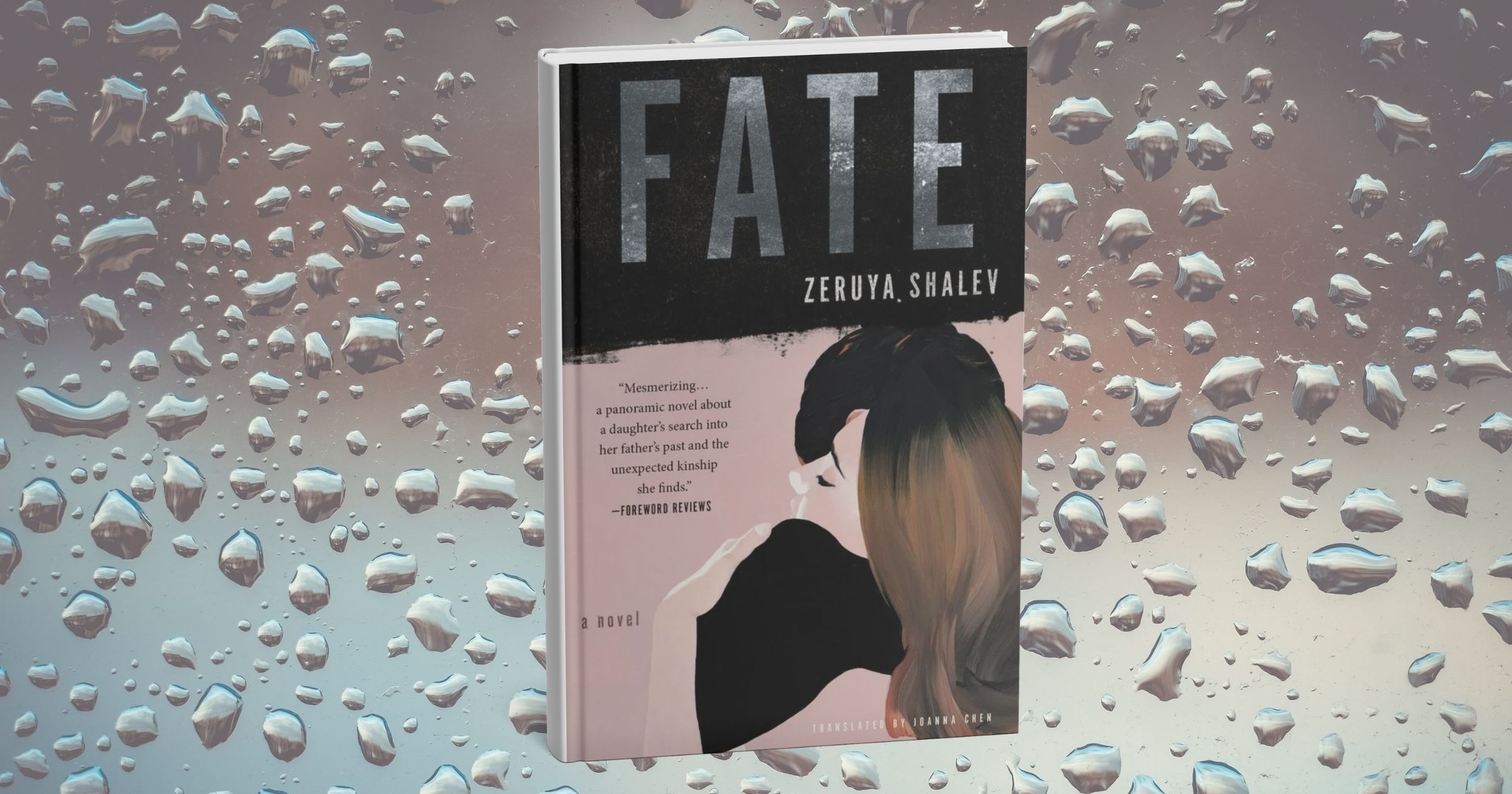
Fate
By Zeruya Shalev. Translated by Joanna Chen (Other Press)
Atara Rubin-Sadan specializes in architectural preservation. As Zeruya Shalev’s outstanding new novel, Fate, opens, Atara is focused less on her career as an architect than on excavating her family history, particularly the mysteries surrounding her late father, Menachem, or Mano.
Fate is the sixth novel by the award-winning Shalev, all of which are available in English translation. Born on Kibbutz Kinneret in northern Israel, she is part of a famed Israeli literary family that includes her cousin, Meir Shalev, one of Israel’s most beloved and celebrated novelists, who passed away in 2023.
Published in Israel in 2021, Fate’s Hebrew title is Pliyah, usually translated as wonder, marvel or astonishment. Indeed, Shalev’s book is all of those, but fate, and how lives become unexpectedly entangled, is equally central, with paths crossed in ways that echo ancient tales. Among the novel’s many biblical references are allusions to the story of Ruth and Naomi in the intergenerational connection between its two female protagonists, middle-aged Atara and the elderly Rachel.
Atara’s father, an accomplished neuroscientist, has always treated her with a coldness that could veer into cruelty and violence. When, on his deathbed, he calls out in a soft, loving voice, Atara soon realizes he isn’t speaking to her but to Rachel, his first wife, declaring her great beauty, his undying faithfulness and asking for forgiveness. Before that moment, Atara had only known of his first wife from an overheard conversation and a peek at her photograph in a booklet entitled Fighters for the Freedom of Israel.
Almost 70 years after Rachel and Mano last saw each other, Atara tracks the woman down in an effort to uncover her father’s past and his involvement, along with Rachel, in fighting against the British in the years leading up to the creation of the State of Israel. The novel then unfolds through Atara and Rachel’s memories and experiences, alternating between pre-state and contemporary Israel.
It also shifts between three settings shaped by personal history and politics: Atara’s childhood home in Jerusalem; Haifa, where she now lives; and an unnamed West Bank settlement, where Rachel makes her home.
After her brief marriage to Mano, Rachel remarries. She raises her family, works from home, cooks for others and recalls with an “aching heart” recipes made by her mother. Years earlier, she had defied her parents to join the Jewish underground.
After 1967, Rachel’s secular family moves to a new settlement beyond the Green Line and not far from Jerusalem. One son becomes a Breslov Hasid; the other stays secular and is upset that his elderly mother still lives in the settlement, calling it “part of this deplorable occupation.”
For middle-aged Atara, Haifa is a refuge from Jerusalem, a city she feels is burdened by history and the “faith of generations upon generations over thousands of years.” Haifa, by contrast, “still aroused hope in her.” Its architectural abundance astonishes her, with its “merging of cultures alongside a mesmerizing merging of mountain and sea, all this with pleasant modesty, devoid of the tense hubris of her city of birth.” In Haifa, she begins to confront both her past and present.
That includes her troubled marriage to Alex, who had wanted to marry her the first moment he saw her, despite their being married to other people at the time and each having a child. “With nerves jangling, they circled around each other at the beginning of their union,” Shalev writes, “but after dismantling two families, their marital immune system became weaker and weaker, and they infected each other with every possible germ.”
In Fate, Shalev provocatively probes themes of marriage, memory, history, mysticism and political passions and their reverberations across generations. Whether describing Israeli landscapes or emotional life, Shalev writes with originality, intensity and lyricism.
Sandee Brawarsky is a longtime columnist in the Jewish book world as well as an award-winning journalist, editor and author of several books, most recently of 212 Views of Central Park: Experiencing New York City’s Jewel From Every Angle.
 Facebook
 Instagram
 Twitter


Leave a Reply