



Arts


‘The First Salute:’ An Obscure Jewish Revolutionary War Story
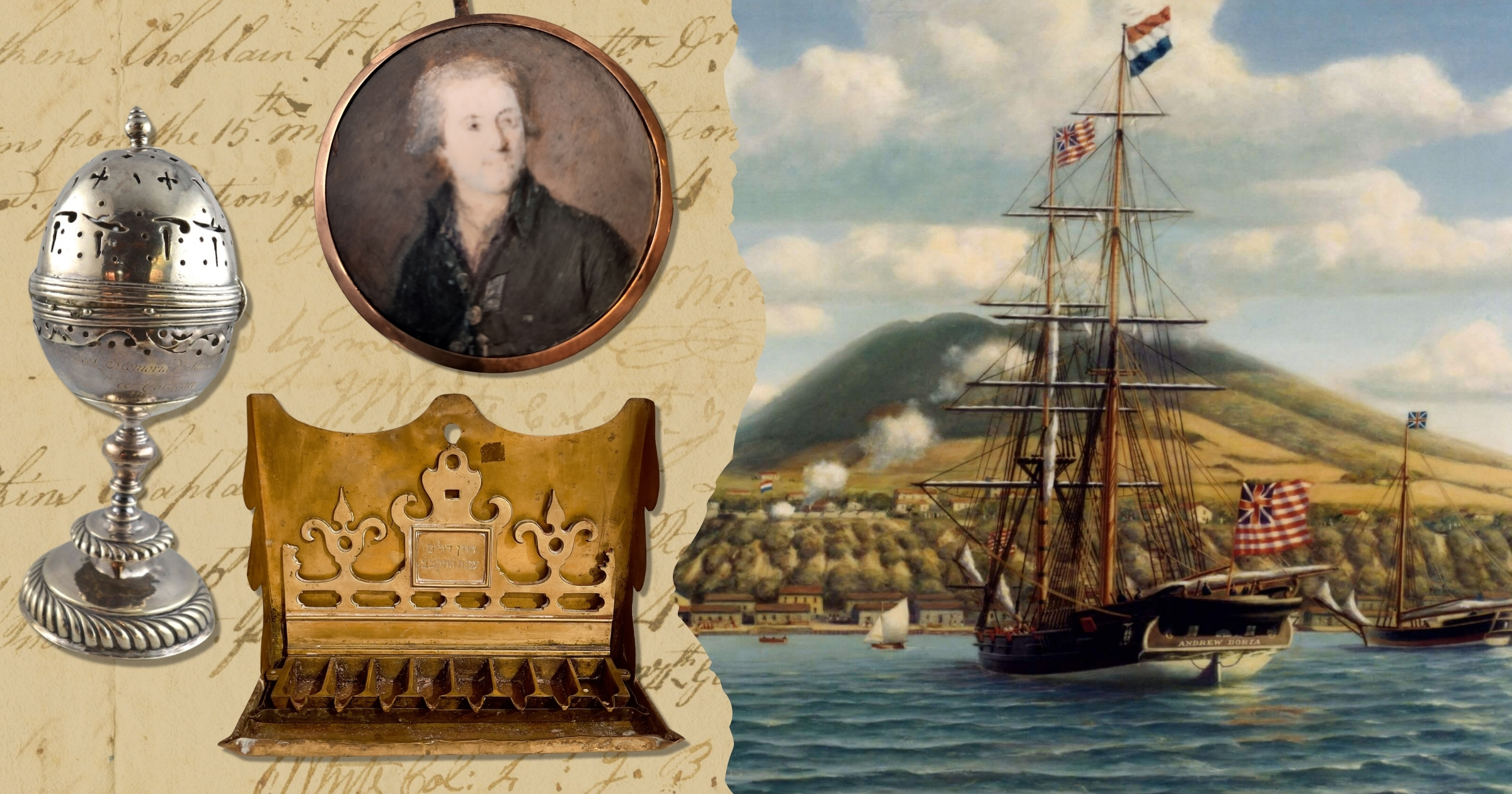
A tiny, plucky community fighting for freedom. A dastardly villain who gets his comeuppance. A hard-won triumph for the side of justice—all set on a photogenic tropical island.
“The First Salute: An Untold Story of the American Revolution,” a landmark new exhibition at Philadelphia’s Weitzman National Museum of American Jewish History, has all the elements of a great American story. Fittingly, the account of the pivotal role that a Caribbean Jewish community played in winning America’s independence is being told in the nation’s original capital as the country prepares to celebrate its 250th anniversary.
“It’s a story with a lot of subplots that are truly relevant now, like religious freedom,” said the museum’s new CEO, Dan Tadmor, in an interview at the museum. “Which, once again, is sometimes called into question and is the reason why Jews sided with the right side of history in supporting the American Revolution.”
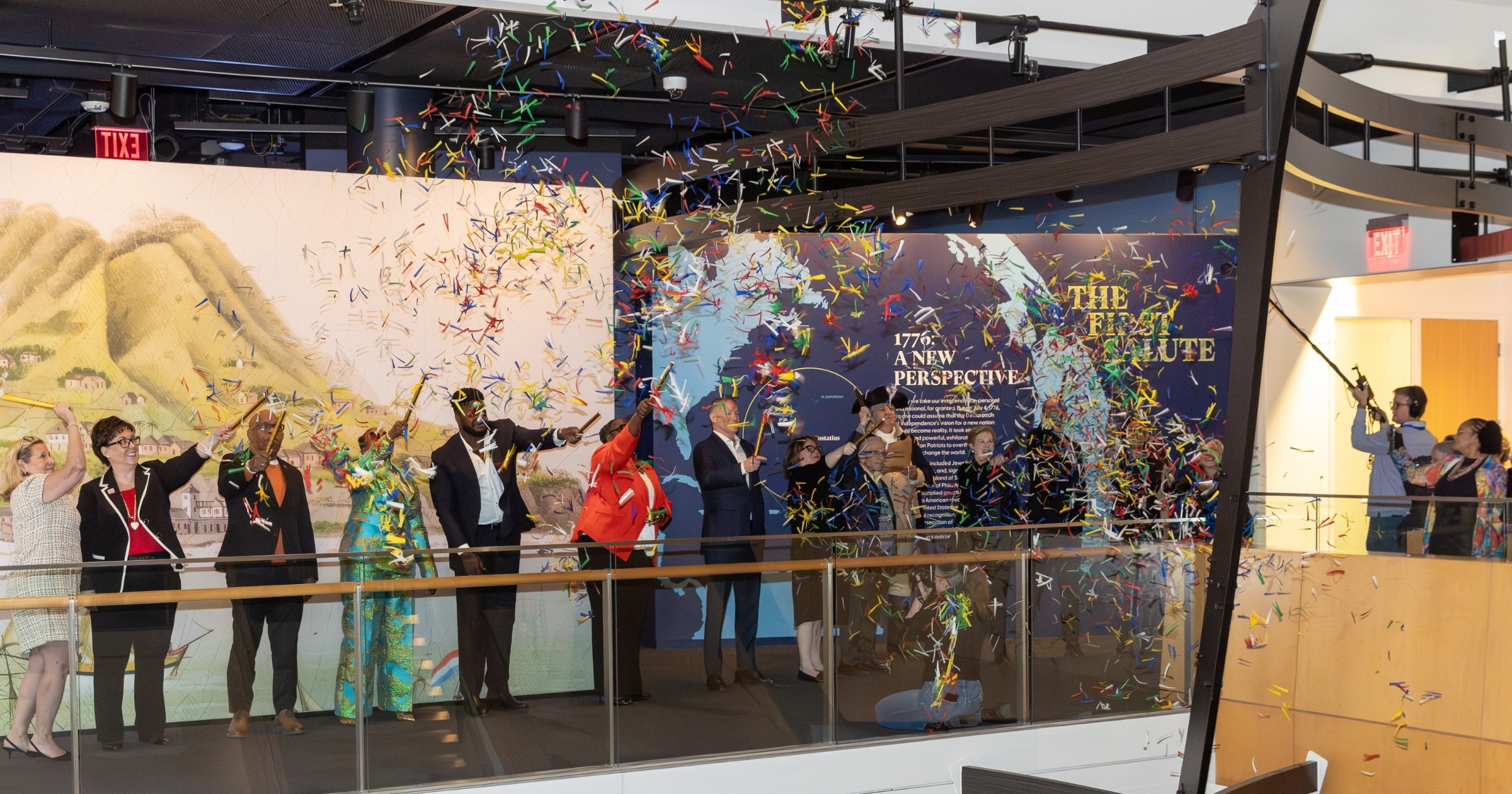
Jewish values, such as liberty and religious freedom, are also “why this museum is situated on Independence Mall,” he added, waving his hand toward the view from the Weitzman’s windows. Within a block of the museum, in Philadelphia’s historic core, is a collection of iconic American sites, including the Liberty Bell; Graff House, where Thomas Jefferson wrote the Declaration of Independence; Independence Hall, where the Constitution was drafted and signed; and Benjamin Franklin’s original post office.
Far less familiar, and much further away, is the teeny Caribbean island of St. Eustatius (known as Sint Eustatius in Dutch and, by locals, as Statia), a onetime Dutch colony wedged between St. Kitts & Nevis and St. Barthélemy, where the action of “The First Salute” takes place. (“Have you ever heard of St. Eustatius?” was the furtive, embarrassed whisper circulating during the exhibition’s preview. Nobody had.)
As the exhibition, which runs through April 2027, explains, Sephardic Jews whose ancestors had been expelled from Spain and Portugal during the Inquisition first settled on the 3- by 6-mile island around 1660. Many were maritime tradespeople, and by the mid-1700s, the Jewish community comprised nearly a third of the island’s 2,000-strong population and was able to maintain a synagogue, called Honen Dalim.
Set in the museum’s second-floor exhibition space, “The First Salute” takes viewers into that world, aided by AI-generated film recreations of battles and harbor scenes alongside through four interactive portraits of Jewish inhabitants of St. Eustatius. Displays explore the history and Jewish community of the tropical island through colorful maps and landscapes as well as artifacts and sepia-toned vintage documents in English, Spanish and Hebrew. Among the documents are a ketubah of the era, its format recognizable despite the yellowing; a copy of Spain’s 1492 royal expulsion decree; and letters from Jewish merchants. Objects include a shofar-like ram’s horn that Jewish soldiers used to carry gunpowder and a diminutive 1700s Torah scroll from the Suriname mainland.
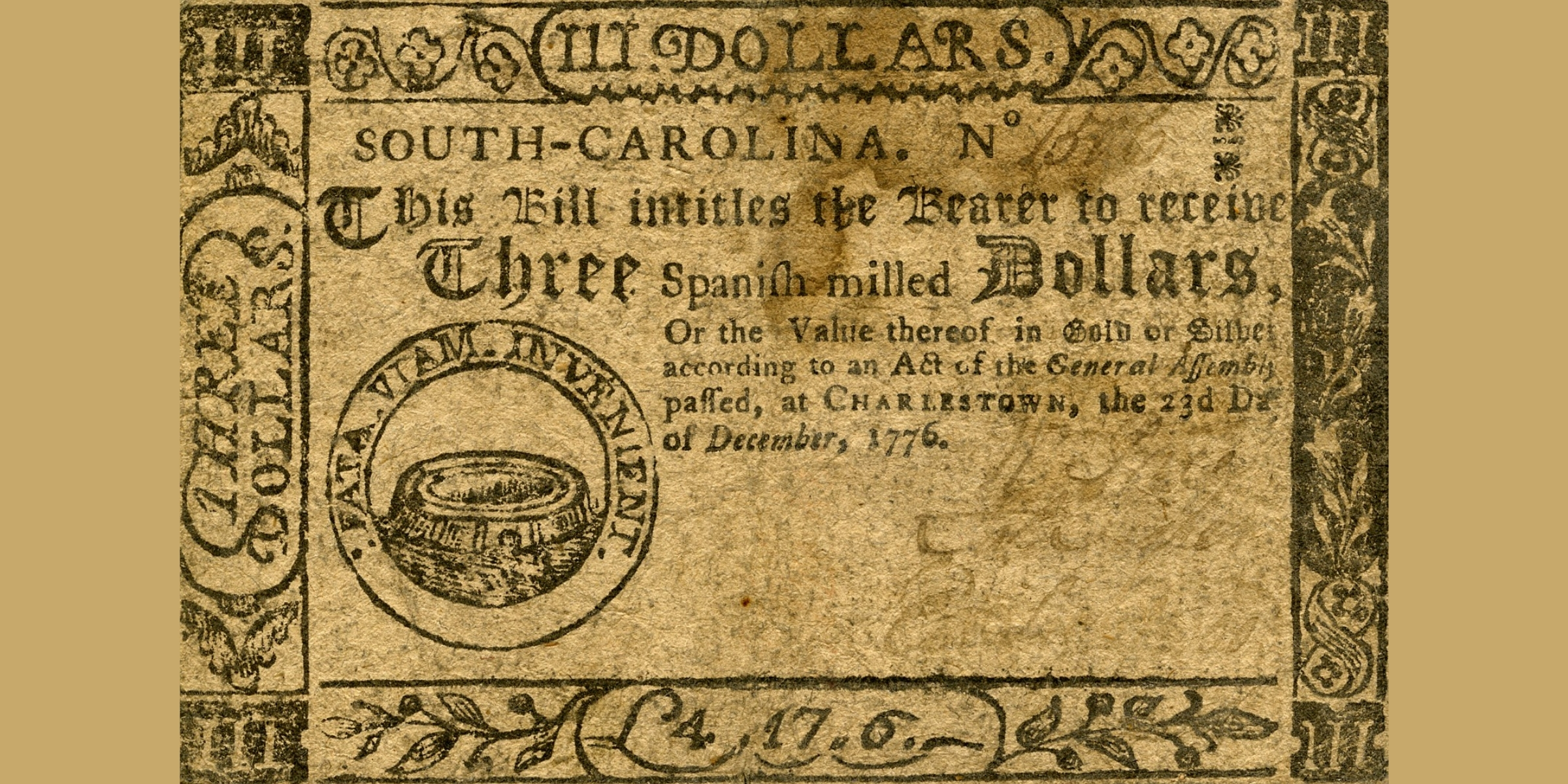
We learn how, when the Revolutionary War broke out, some of St. Eustatius’ Jews took up arms against the British while others leveraged their family and mercantile ties across the Caribbean and Europe to help the American cause, making the island’s busy commercial port a hub of gunpowder and weapons exchange and funneling military supplies to North America. All of this was born of a shared commitment to liberty and, given the history of Jewish persecution, to religious freedom as well as the hope that America would hold future economic opportunities.
In November 1776, an American ship flying the nation’s new flag and carrying an original print of the Declaration of Independence—the very same document that is on display at the museum—sailed into St. Eustatius’ harbor and fired a 13-gun salute, one for each American colony. In response, the island’s Dutch governor greeted the ship and its flag by firing a 11-gun salute, two fewer than received—a then-traditional welcome—marking the first official recognition of American independence.
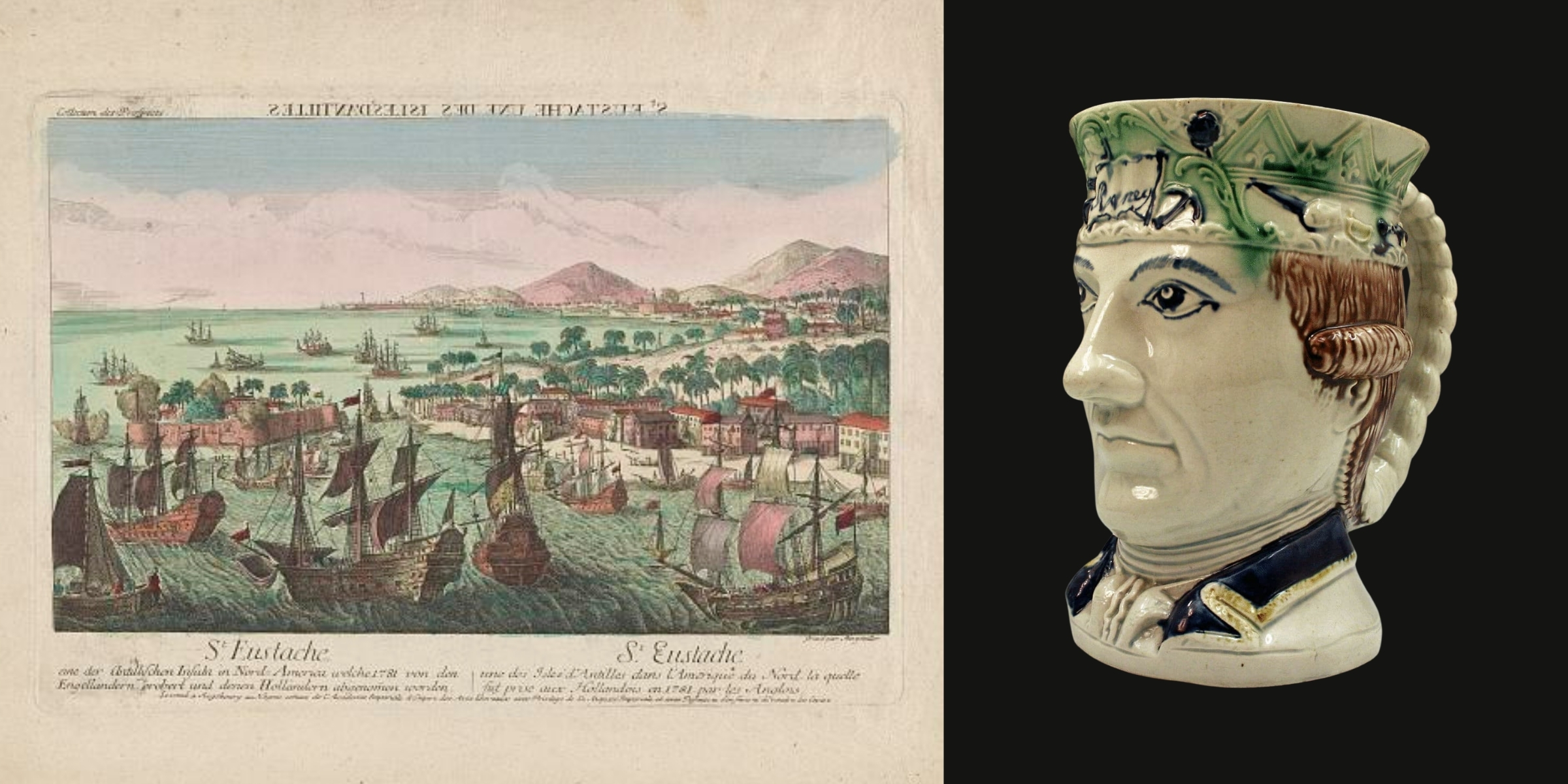
The climax of the tale comes in 1781, when British Admiral George Rodney attacked the island, forced the Dutch to surrender and went on a rampage against the island’s Jews. While he was imprisoning Jewish men and pillaging their homes and warehouses—a move denounced back in London’s Parliament by the philosopher Edmund Burke—a French fleet sailed by unnoticed to aid George Washington, leading in part to the American victory in the Revolution. (Rodney’s inventory list of items plundered from the Jewish community is included in the exhibition.)
“Had it not been for that nest of vipers, this infamous island,” Rodney fumed in a letter shortly thereafter, “the American rebellion could not possibly have subsisted.”
Josh Perelman, senior adviser at the Weitzman, who curated “The First Salute,” called it “a remarkable story that almost no one knows, but one that’s fundamental to the history of this nation. It introduces people to the long history of Jews in North America and the very real roles they played in helping to bring this new nation to fruition.”
As America celebrates its 250th birthday, “we’re remembering why they took those risks. Why they put a bet on a wholly new idea for society,” he added. “And especially as Jews, who could not be promised liberty anywhere else in the world.”
Author and scholar Pamela Nadell, who, along with fellow historians Jonathan Sarna and Laura Arnold Leibman consulted on the exhibition, said she was impressed at how “The First Salute” illuminates the Jewish diversity of colonial times.
“Even when it was a tiny Jewish community, we’ve got men and women, we’ve got (pro-British) loyalists, we’ve got patriots,” noted Nadell, whose recent book, Antisemitism, an American Tradition, won a 2025 National Jewish Book Award. “The Jews are scarcely a 10th of the (North American) population at that moment in time, and yet because of their connections, they played such a powerful role.”
At the exhibition’s unveiling in April, St. Eustatius’ current, and first female, governor, Alida Francis, emphasized how the island has long cherished its 18th-century star turn, as well as its enduring ties to America and its Jews.

Francis told Hadassah Magazine how annually on St. Eustatius Day, November 16, the island celebrates “the role that we played in American history,” she said. “We will hoist the flag of America, and we will sing the American anthem, along with our own local anthem, and along with the Dutch anthem. And we have been doing that forever…. We’ve always kept that story alive.”
Yet as critical as the story was to American independence, few knew about it.
But Tadmor, who arrived at the Weitzman last year after overseeing a $100 million expansion of Tel Aviv’s ANU Museum of the Jewish People, knew the story.
“It’s far more than a Jewish story; it’s an American story that’s been overlooked, in which Jews play a surprising part that has also been overlooked,” said Tadmor, who saw the 250th and the Philadelphia setting as the ideal place to finally promulgate the long-obscured tale of St. Eustatius.
“The First Salute” also marks the first in a series of ambitious programs Tadmor has in mind for the Weitzman’s next chapter. Later this year, responding to a sobering new era, the museum will unveil a permanent exhibition on antisemitism. Meanwhile, its core exhibition on Jewish American history, now 16 years old, will also get an update; like “The First Salute,” it will incorporate modern multimedia to bring immediacy to the telling.
For now, Tadmor hopes visitors will leave “The First Salute” appreciating how integral Jews have always been to the centuries-old American experiment. “The American Jewish story is what happens when Jews…are afforded liberty and opportunity,” he said. As Admiral Rodney found out the hard way, he added, Jews “flourish and contribute.”
Hilary Danailova writes about travel, culture, politics and lifestyle.
 Facebook
 Instagram
 Twitter

Marinus Quist says
An interesting article, but the tale is not as obscure as the title suggests. After all, acclaimed American historian author, Barbara Tuchman, wrote a national best seller about it in the late 1980s. There are also a few mistakes in the article, as follows: 1) The American ship, ANDREW DORIA was not flying the “Stars and Stripes”in November of 1776, as that flag had not, yet, been designed or adopted. Instead, the vessel flew the Grand Union or Continental Union flag, which consisted of 13 red and white stripes with the combined red and white crosses of St. Andrew and St, George on a field of blue in the upper corner quadrant. (See pp 47-48 in Tuchman’s book.) 2) “The climax of the tale” relating to the British take-over of the Golden Rock in 1781 and “Shortly thereafter” relating to the First Salute in November 1776 have been temporally turned around.
Finally, while ideals like liberty and religious freedom were laudable motives for the merchants of St, Eustatius, don’t ignore the fact that those merchants were also engaged in smuggling and tax and tariff evasion; and in most cases their primary motivation was profit .