




Books
Feature


A New Jewish Media Ecosystem Pushes Back

Back in early 2024, the Israeli writer Lihi Lapid was excited for the English-language publication of her novel On Her Own. There was just one problem. Her American publisher, HarperCollins, couldn’t find a Manhattan bookstore willing to host the launch party.
“I’m an Israeli author. My family name is the name of a politician in Israel, and I’m his wife,” Lapid, whose husband, Yair, served as Israel’s prime minister in 2022, recalled thinking as the months passed with no launch event in sight. At that point, Israel was at war in Gaza, and American campuses were aflame with anti-Israel demonstrations. “And maybe none of the stores wanted to get into it—to have a demonstration, to have this mess outside the store.”
One venue finally offered to host a small event, but only in a back room after its regular hours.
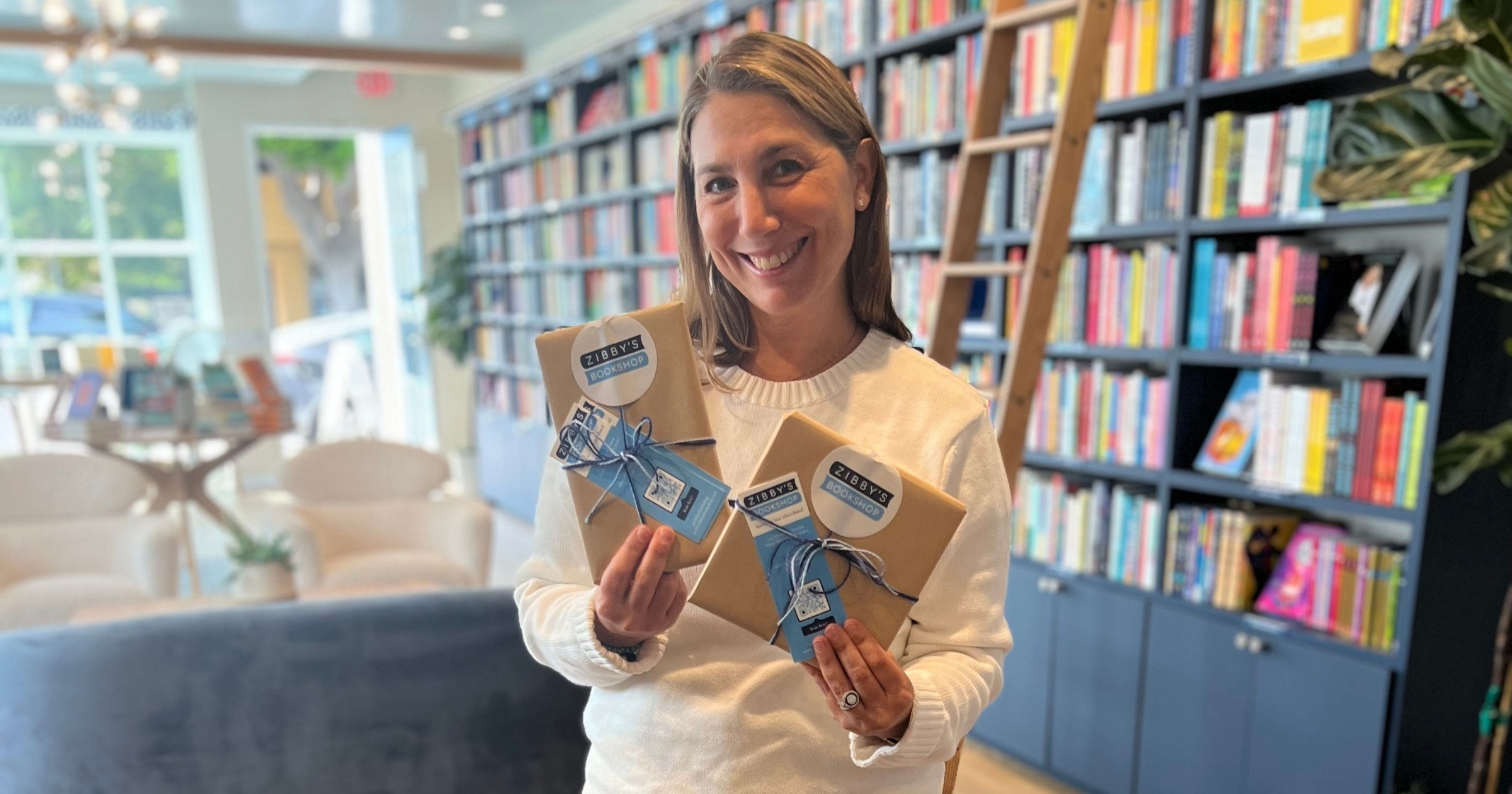
Lapid’s luck changed when publishing entrepreneur Zibby Owens—founder of Zibby Media and a literary podcast host—invited her to contribute to On Being Jewish Now, Owens’ anthology on the post-October 7, 2023, Jewish experience. Owens subsequently republished in 2026 I Wanted to Be Wonderful, an earlier novel of Lapid’s, through her boutique publishing outfit, Zibby Books. Although its promotion was mostly limited to Jewish platforms and communities, I Wanted to Be Wonderful found a wider audience—and vaulted to the USA Today best-seller list a week after its publication.
“That’s when I realized how much power there is in the Jewish community,” Lapid said. “When a publisher like Zibby decides to publish a book of an Israeli writer, it can get to the top.”
That power is at the heart of a dynamic new Jewish media ecosystem that is pushing back against what myriad Jewish and Israeli authors describe as growing marginalization as antisemitism has flared and Israel has become a cultural lightning rod.
Similar to the way Jewish doctors founded their own hospitals and lawyers their own firms in response to antisemitism and exclusionary practices at mainstream institutions in the 19th and 20th centuries, Jewish media pioneers are opening publishing houses and imprints, online magazines and professional networks that champion Jewish, Israeli and Zionist authors, books and voices.
Among the high-profile initiatives launched since July are Meg Keene Books from the eponymous writer and media executive, a fiction imprint of Wicked Son, and journalist Howard Lovy’s nonprofit Canary Publishing. Another newcomer is High Line Publishing Studio, establishing in September by Neil Blair, a veteran literary agent known for representing high-profile authors like J.K. Rowling. Its imprint Odessa Editions will spotlight Jewish writers from around the globe. The debuts also feature book-adjacent efforts like the Jewish Joy Network, best-selling romance author Jean Meltzer’s online social network for Jewish creatives, which welcomes not just writers but also comedians, designers, filmmakers and musicians.
These outlets join others established over the past several years that proudly celebrate Jewish writing, including Soncata Press, founded in 2024, and Owens’ own five-year-old Zibby Books. Wicked Son, itself an imprint of Post Hill Press founded in 2020 with a focus on nonfiction, was one of the first of the recent ventures to devote itself to Israeli and Jewish issues.
“I’m delighted that people are all jumping in as a community to help solve a collective problem,” said Owens, author of the new memoir Between Chapters who, through her newsletters, Santa Monica bookstore and other products, has always featured Jewish and Israeli writers among a steady stream of authors from all backgrounds. Since October 7, “I’ve had an onslaught of submissions and podcast pitches from those who are looking to publish Jewish books, looking to platform Jewish authors.”
To be sure, many long-established Jewish authors remain fixtures on the literary landscape, published by the “big five” mainstream publishers—Penguin Random House, Macmillan, HarperCollins, Hachette and Simon & Schuster. These include best-selling novelists Jennifer Weiner, Gary Shteyngart, Allegra Goodman and Taffy Brodesser-Akner, among others.
Rachel Goldberg-Polin, mother of murdered Hamas hostage Hersh Goldberg-Polin, recently offered proof that a compelling human story can transcend anti-Israel media bias. Her account of her family’s ordeal, When We See You Again, published by Random House, hit No. 1 on The New York Times best-seller list earlier this year. Lesser-known Jewish authors have also successfully navigated the tense climate for Jews in publishing—for example, Esther Chehebar, whose 2025 debut novel Sisters of Fortune, set in the Syrian Jewish community, was published by Random House and named a “best book of the month” by People magazine.
Indeed, anti-Jewish bias in the publishing industry is difficult to quantify. Systemic discrimination in a creative field rarely has a clear paper trail, and arguments over what constitutes a Jewish book, or a Zionist one, complicates questions around which authors and books are being published and platformed, which ones are not and the reasons why.
Nevertheless, legions of authors have cited social media campaigns and boycott lists targeting Jewish and Israeli books; literary agents, publishers and reviewers who decline to consider their work; conferences that refuse to include Jewish or Zionist writers on panels; and reluctance from booksellers and book fairs to promote Jewish and Israeli titles.
Meltzer, the author of five romance novels, heard about all this first-hand in a Facebook group for Jewish romance authors. After October 7, she said, “we were being put on ‘do not buy’ lists. We were being shadow banned or outright blacklisted. We had an influx of new members coming in, telling us they were no longer feeling safe in their book clubs, or they were being kicked out.”
Around the world, every month or so brings another report of a Jewish or Israeli book barred from a store or gathering. In August, a Nashville bookstore canceled a book launch event for author Alyssa Rosenheck’s White. Blonde. Jew.: A Call to End Extremism, Speak Up, and Reclaim Center because of an online pressure campaign. In September, a literary festival in Granada, Spain, rescinded internationally recognized Jewish Argentinian novelist Ariana Harwicz’s invitation following objections to her views on Israel.
Last month, the Anti-Defamation League released a report, “State of the Arts,” documenting “a systematic pattern of Jewish and Israeli exclusion” across media, noting that the trend “spans the publishing sector, from publishers to literary agents and editors, authors and beyond.” In an online hub to support Jewish creatives, the ADL also published profession-specific guidelines to combat this exclusion. Writers, for instance, are counseled to build community, document and report antisemitism, share tips about resources and buy and recommend other Jewish works.
The ADL’s prescription aptly sums up Meltzer’s approach. “The best way to take back your power,” she said, “is to lean into your authenticity.”
Meltzer recalls how her 2021 debut, The Matzah Ball, a Jewish-themed romance, provoked a coordinated review-bombing campaign on social media. Over the past three years, she observed, social media has only gotten worse for Jewish writers. Spurred by a desire to nurture her community, Meltzer spearheaded the Jewish Joy Network, enlistingher engineer husband to build a secure online platform available in Hebrew and English. Prospective members must submit identification and pay a small annual fee to join a digital network where users can search a database by region to mobilize against antisemitism and find professional opportunities.
The network launched on September 16. Days later, the Jewish Joy Network’s community feed was already buzzing with activity and unabashed expressions of Jewish and Israeli identities. One author shared photos of her latest book, a Jewish music enthusiast posted songs for Sukkot and a designer showed off her latest Hanukkah merchandise collection.
“This is my way of making sure that not just my Jewish voice continues, but everybody’s Jewish voice,” Meltzer said. She added that her determination stems partly from Jewish pride and partly from the optimism inherent in her genre. Romance writers “believe in happy endings…in stories where Jews live their lives and fall in love—and get the job.”
The Jewish Joy Network is one of numerous new online Jewish ventures. Among them is Artists Against Antisemitism, founded by a group of Jewish authors to advocate for Jews in the arts and create a platform for Jewish creatives to connect and showcase their work, and Judith magazine, a Substack-based publication launched by author and editor Elissa Wald in 2024 that features essays, fiction and poetry from Jewish writers. Wald, who is also the editorial and marketing advisor for Canary Publishing, spearheaded Judith to promote “Jews in the literary world at a time when we are under siege within the industry,” she wrote in her introductory essay to the magazine.
Another digital offering, Golda—a lifestyle outlet from former Tablet magazine editor Stephanie Butnick—promotes Jewish books, stories and creators through a newsletter, podcast, website and collaborations with the Jewish Book Council (JBC).
These initiatives join established entities like the JBC as well as Hadassah Magazine itself through its books coverage and Hadassah Magazine Presents podcast, which have long championed Jewish and Israeli authors.
Some new publishing ventures specifically cite an untapped market for the Jewish stories neglected by existing outlets. Neil Blair’s London-based High Line, which expects its first titles to hit shelves in spring 2027, has been getting attention from Jewish media on both sides of the Atlantic for its impressive acquisitions and stellar editorial team. Forward columnist Aviya Kushner is its New York-based American acquiring editor, and author and publishing veteran Jacky Klein is the executive publisher of its Jewish-focused Odessa Editions division.
Klein acknowledged that she and other publishing insiders have watched Jewish authors struggle to obtain or keep representation “for mostly opaque reasons. ‘It’s not the right moment for your voice’ or ‘I just wouldn’t know where to place this book.’ ”
The High Line team, she added, saw “a commercial opportunity to step into that space with a publishing house that is all about creative freedom, broad ideas.”
Odessa Editions, said Klein, will publish both fiction and nonfiction from Jewish and occasionally non-Jewish writers around the world, encompassing “the full range of Jewish experience—history, cookery books, antisemitism, the Holocaust, Israel, Jewish life, personal stories. The intention is to be as inclusive as possible.” In 2027, it plans to publish eight to 10 books and scale up from there.
Among its initial offerings are the British publications of best-selling author Dara Horn’s latest manifesto, The Final Solution to the Jewish Question: A Love Story for the Living, and Canadian Israeli journalist Matti Friedman’s Out of the Sky: Heroism and Rebirth in Nazi Europe, about Hannah Senesh. In America, it will publish Haaretz military correspondent Amos Harel’s Anatomy of a Failure: Road to October 7th.
Also in 2027, Meg Keene Books, which plans to publish four to six titles a year, will bring British author Howard Jacobson’s Howl to American audiences. The Booker Prize-winning author, whose previous works have been distributed in the United States by major publishers like Simon & Schuster, reportedly had difficulty finding a mainstream American publisher for his novelization of the experience of British Jewry post-October 7.
For his part, Michigan-based journalist and editor Lovy described his Canary Publishing as an “unapologetically Jewish and Zionist home for new Jewish voices” in adult literary fiction. Although the publishing house has not yet announced release dates for its first books, Lovy said the venture is designed to be agile—“to respond to the moment, not to a marketing calendar set two years ago,” with a streamlined timeframe from acceptance to print.
Then there’s the two-year-old Soncata Press, founded by Ann Marie Sabath, the author of 12 books on business, who recently retired from a 33-year consulting career. She founded the boutique publishing house as an independent outlet for books that “challenge, illuminate and endure,” as she put it.
The goal wasn’t Jewish books in particular, Sabath said, but of the nearly 200 manuscripts first submitted to her, a large percentage were from Jewish and Israeli authors, many of whom had been rejected elsewhere. “Word got out that we responded. It was bashert,” said Sabath, who’s not Jewish but is married to a Jew, and who sprinkles her rapid-fire patter with Hebrew and Yiddish expressions.
Bashert indeed: Soncata’s breakthrough book, released in fall 2025, was Israeli author Yishai Ishi Ron’s Dog, about a former Israel Defense Forces officer and the fallout from his personal trauma, which won a National Jewish Book Award. Sabath expects Almost True: Stories from Jerusalem, a November title from Israeli journalist Tal Shalev, to be a success as well.
“I’ve always believed that when there’s an obstacle, you walk around it,” Sabath said. “That is what so many Jewish and Israeli authors have done. They’re machers. And so am I.”
So far, the strategy is working. Soncata focuses on Israeli and Jewish readership for a number of its annual titles, but “based on who the followers are on social media, and what I see on Amazon, sales are coming from all over the world,” Sabath said. Indeed, the boutique publishing firm has licensing agreements in Korea, Australia and Slovenia, with more in progress.
Also embracing a global Jewish voice, but for Jewish writers seeking both editorial autonomy and the benefits of collective promotion, is Vayinafash Press. Launched in 2025, the publishing cooperative from Reform rabbis and authors Brian Stoller and Evan Schultz—of Temple Beth El in Great Neck, N.Y., and Temple B’nai Israel in Bridgeport, Conn.—and fellow writer Joel Newton, challenges the traditional publishing setup. Vayinafash Press is a hybrid where authors fund their own printing and the collective shares in the marketing costs. Stoller said he and his co-founders envisioned a business where writers like themselves could leverage each other’s networks to help with promotion while retaining more agency over their individual projects.
“In the past, so many people were prevented from doing that by conventional gatekeeping,” Stoller said. “But in today’s world, independent publishing is super easy and very inexpensive.” His most recent book is Politics and Pluralism, a collection of essays on antisemitism, democracy and Israel “through the lens of Torah.”
While these new outlets offer opportunity, they also carry the risk that Jewish publishing could become a kind of echo chamber. Publishing and media are getting more siloed, said Owens of Zibby Media, reflecting an overall cultural landscape where there is “more and more specialization.”
Yet “part of why we share our stories is to connect and to learn more about other people not like us,” she said. “But if the doors are closed, what choice do we have?”
The experience of Israeli novelist and screenwriter Noa Yedlin—winner of a Sapir Prize, Israel’s highest literary award—shows the importance of the Jewish community opening doors, even within those silos. A self-described “secular, very liberal woman of the world,” Yedlin said she discovered firsthand “the power of the Jewish community” as a chill descended on Israeli writers promoting their work abroad.
“It’s been a really, really difficult time,” said Yedlin, whose first novel released in the United States, Stockholm, published by a HarperCollins imprint, came out in the weeks following October 7. Her latest work in English translation, House Arrest, was brought to the United States by New Vessel Press, an independent outlet that in 2026 announced a co-publishing program with Berlin-based Altneuland Press to bring translated Hebrew works to the American market. Founded in 2024, Altneuland is the first Hebrew-language publishing house established outside Israel since 1948.
It’s harder and harder, Yedlin said, to find non-Jewish audiences receptive to nonpolitical narratives that humanize Israelis—“people that cheat and divorce and give up carbs and do Pilates,” she said, like everyone else.
With mainstream publishers and booksellers increasingly aloof, she said, she appreciates the way Jews throughout the world have rallied to the cause of Israeli literature.
“These are all very, very busy people, but the minute that they hear that I’m an Israeli author, they are eager to help,” she said, recounting how New York Jewish journalists shared advice, made introductions and helped arrange events in the United States to promote House Arrest. Among those events is a literary discussion in November with fellow Israeli novelist Zeruya Shalev, moderated by Hadassah Magazine Executive Editor Lisa Hostein, at the Miami Book Fair.
Before October 7, Yedlin said, Israelis often told themselves they didn’t need the Jews of the Diaspora: “We’re O.K. by ourselves. We have the IDF.” And Jews outside of Israel would say, “Israel is strong. It will always be there, waiting for us,” she said. “And I think both sides now realize that they are wrong. We all need each other.”
Hilary Danailova writes about travel, culture, politics and lifestyle for numerous publications.
 Facebook
 Instagram
 Twitter
Leave a Reply