



Food


Leah Koenig’s Sweet Journey Through the Diaspora
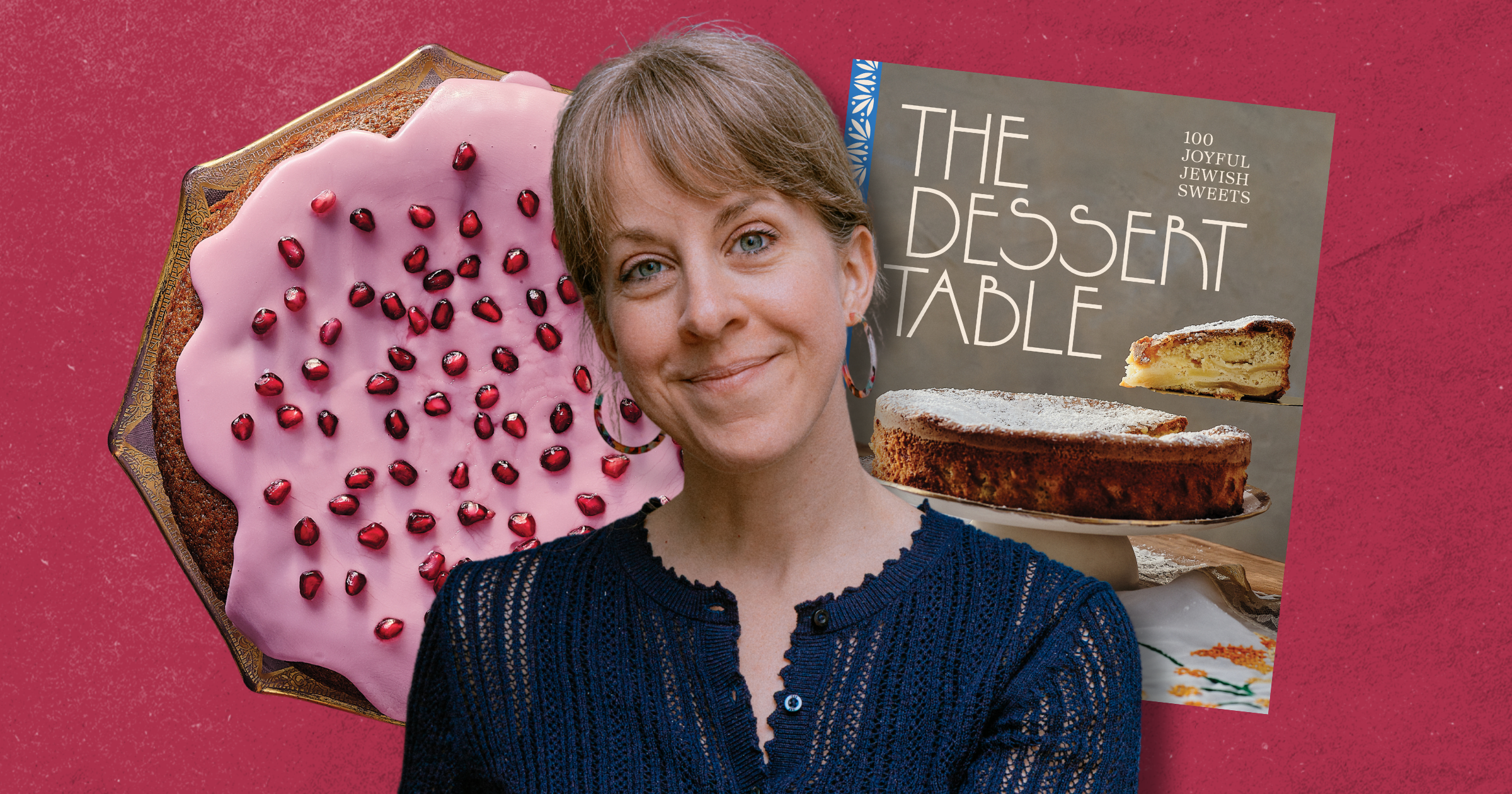
Throughout a long and delicious career as one of her generation’s most respected Jewish food writers, Leah Koenig never really fancied herself a baker.
“I used to gravitate more toward savory than sweet,” Koenig, 42, told me recently by phone from her home in Brooklyn. Even after writing multiple cookbooks, including Little Book of Jewish Sweets, she still felt, in her words, “like a fraud on the baking front.”
That makes her eighth cookbook, The Dessert Table: 100 Joyful Jewish Sweets, out September 1, both an unexpected turn and a deeply satisfying read.
“Portico was 15 years in the making and felt like my magnum opus,” Koenig said of her Rome-focused Jewish cookbook, which won the 2024 International Cookbook Award from the International Association of Culinary Professionals. She is also the author of the beloved Hadassah Everyday Cookbook, her first book, which was released in 2011.
And yet, even for a seasoned recipe developer and writer like Koenig, the more technical demands of baking presented a challenge.
“I had to up my learning curve,” she said. “My goal was to help readers develop the intuition our grandmothers seemed to possess in every finger: knowing, for instance, the difference in texture between cake batter and cookie dough, and when something is ready to come out of the oven.
“Now, after writing this book, I finally consider myself a baker.”
That transformation is central to the book and is conveyed in Koenig’s comforting, confident and scholarly voice. Interspersed among useful sections on stocking a Jewish baking pantry and baking with children are informative essays on the history of babka—which began as a recipe to use leftover challah scraps—as well as the role Jews played in the chocolate trade and the origins of Eastern European rugelach.
But Koenig doesn’t stop at the so-called “Ashkenormative” canon of sweets.
“There’s so, so much beyond that,” she said. “I wanted to teach my cooks and readers about the geographic and cultural vastness of Jewish baking.”
In addition to her many interpretations of Ashkenazi classics such as mandelbrot and apple cake, the book includes an illustrated map charting the provenance of recipes that span the Diaspora from Cochin (Coconut-Cardamom Semolina Cake) to Curaçao (Crisp Sephardi Sponge Cookies). Along the way, she introduces readers to Greek Sweet Cheese Bougatsa, a phyllo-dough pie layered with custard, and Grape Spoon Sweet, a preserve inspired by the Sephardic Turkish, Greek and Balkan custom of welcoming guests with fruit preserves and cold water.
Some recipes, like Persian Rice Pudding, hew close to tradition, which is especially helpful when they may be a reader’s first encounter with a certain ethnic cuisine. Others are modernized or playfully reimagined—white chocolate-lime babka, anyone?
Koenig also finds inspiration from contemporary chefs and bakery owners who connect the long tradition of Jewish baking to a new generation. For example, Koenig’s Chewy Chocolate Gingersnaps are inspired by New York chef and restaurant owner Eli Sussman’s gingersnaps.
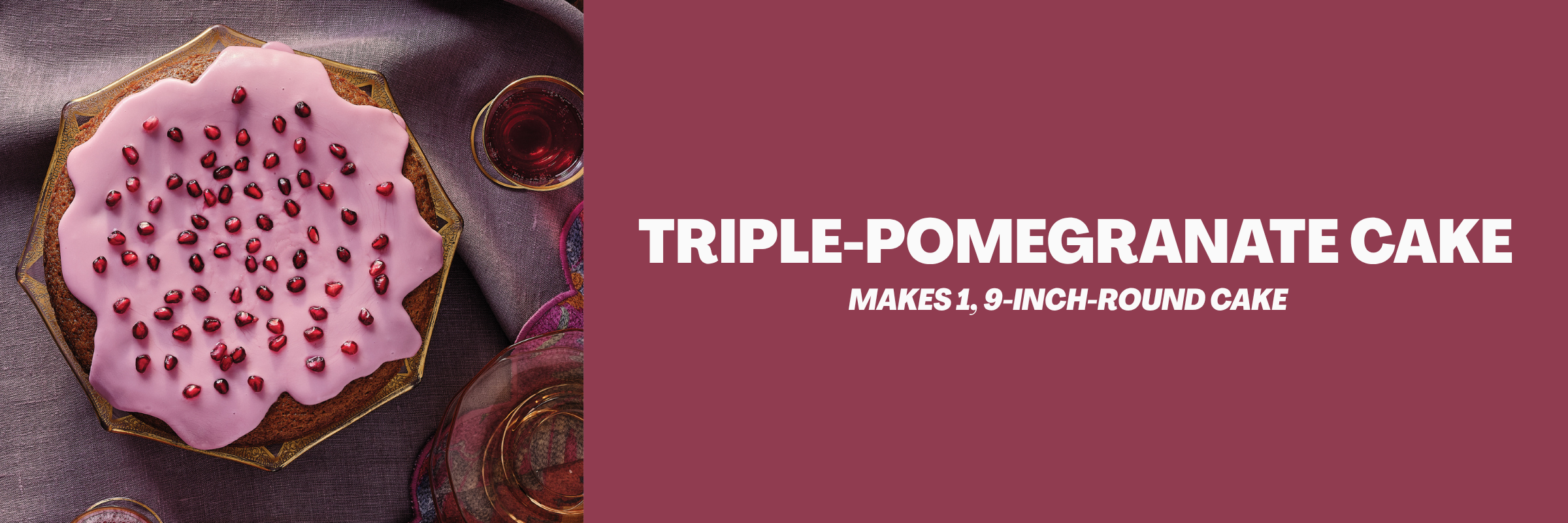
Koenig devotes generous attention to the sweets that carry us from Rosh Hashanah, which this year begins on September 11, through the Yom Kippur break fast and Sukkot, including the Triple-Pomegranate Cake featured here. It is a visually arresting and modern creation built around one of the Jewish New Year’s most resonant symbols. Pomegranate molasses added to the batter deepens the flavor, pomegranate juice appears in both the cake and the glaze, and ruby-red seeds are scattered across the top.
This High Holiday season, between stops on her book tour, Koenig plans to enjoy her own creations at the table with her husband, Yoshie, and their children: Max, nearly 12, and Bea, 7, who also served as selective but enthusiastic tasters of the book’s recipes.
And come Hanukkah, she plans to make sugar cookies using the same cutters her mother used with her when she was a child.
“I look forward to my kids carrying on those traditions,” Koenig said. “And then going ahead and making their own.”
FOR THE CAKE:
- 1 1/2 cups all-purpose flour
- 1 tablespoon cornstarch
- 1/2 teaspoon baking powder
- 1/2 teaspoon baking soda
- 1/4 teaspoon kosher salt
- 1/2 cup neutral vegetable oil
- 1 cup granulated sugar
- 2 large eggs
- 2 tablespoons pomegranate molasses
- 1 teaspoon vanilla extract
- 1/3 cup pomegranate juice
FOR THE GLAZE AND TOPPING:
- 1 1/2 cups confectioners’ sugar, sifted
- 2 tablespoons pomegranate juice, plus more if needed
- Pomegranate seeds
1. Make the cake: Preheat the oven to 350°. Grease a 9-inch-round springform pan or cake pan.
2. Whisk together the flour, cornstarch, baking powder, baking soda and salt in a medium bowl.
3. Whisk together the oil, sugar, eggs, pomegranate molasses and vanilla in a large bowl until smooth. Stir half of the flour mixture into the oil mixture, followed by the pomegranate juice and then the remaining flour mixture.
4. Pour the batter into the pan and smooth the top.
5. Bake the cake until a tester inserted into the center comes out clean, 25 to 30 minutes. Remove from the oven and transfer the pan to a wire rack to cool for 30 minutes, then gently unmold the cake and place it directly on the rack to cool completely.
6. When the cake is fully cooled, make the glaze: Whisk together the confectioners’ sugar and pomegranate juice in a medium bowl until a thick but pourable glaze forms. If the glaze is too thick, whisk in more pomegranate juice, 1 teaspoon at a time, until the desired consistency is reached.
7. Pour and spread the glaze evenly over the cake, allowing it to drip down the sides. Sprinkle the top of the cake with pomegranate seeds and let the cake sit until the glaze sets, about 20 minutes, before serving. Store any leftovers, covered, in the fridge for up to 5 days.
FOR THE DOUGH:
- 1 1/2 cups all-purpose flour
- 12 tablespoons (1 1/2 sticks) cold unsalted butter or vegan butter, cut into small pieces
- 1/2 teaspoon kosher salt
- 3 to 5 tablespoons ice water
FOR THE FILLING:
-
1 pound plums (5 to 7 medium), pitted and cut lengthwise into 1/4-inch slices
-
1/3 cup granulated sugar
-
1/2 teaspoon grated lemon zest
-
1 tablespoon fresh lemon juice
-
1 tablespoon allpurpose flour
FOR THE STREUSEL AND FINISHING:
-
1/4 cup all-purpose flour
-
1/4 packed cup light brown sugar
-
3/4 teaspoon ground cinnamon
-
1/8 teaspoon kosher salt
-
2 tablespoons cold unsalted butter or vegan butter, cut into small pieces
-
1 large egg, beaten, for egg wash
Adeena Sussman lives in Tel Aviv. Her new cookbook, Zariz: 100 Easy, Breezy, Tel Aviv-y Recipes, was published in April. She is also the author of the New York Times best-selling Shabbat: Recipes and Rituals from My Kitchen to Yours and Sababa: Fresh, Sunny Flavors from My Israeli Kitchen.
 Facebook
 Instagram
 Twitter

Leave a Reply